

Agentic AI is transforming how machines think, plan, and act independently. This guide explains autonomous AI agents, how they work, their real-world business applications, and why they represent the next major shift in artificial intelligence. Discover how Agentic AI differs from traditional AI systems, the benefits of intelligent automation, and the future of AI-powered workflows, enterprise tools, and autonomous decision-making across industries.
Something interesting is happening in artificial intelligence right now. We’ve spent the last few years getting comfortable with chatbots that answer our questions and image generators that create art on command. But a new wave of AI is arriving, and it doesn’t just respond to us. It thinks, plans, and gets things done on its own.
This is agentic AI, and it’s quietly reshaping how software works. Instead of asking an AI to write you an email, you can ask it to read your inbox, prioritize what matters, draft replies, and schedule follow-ups while you focus on something else. Instead of getting a list of restaurants for your trip, you can have an AI agent actually book the reservations.
This guide breaks down everything you need to know about agentic AI, from how it works under the hood to how businesses are using it today and where it’s headed next. Whether you’re a curious reader, a business leader, or a developer looking to build with this technology, you’ll find practical, honest information here.
1. What Is Agentic AI?
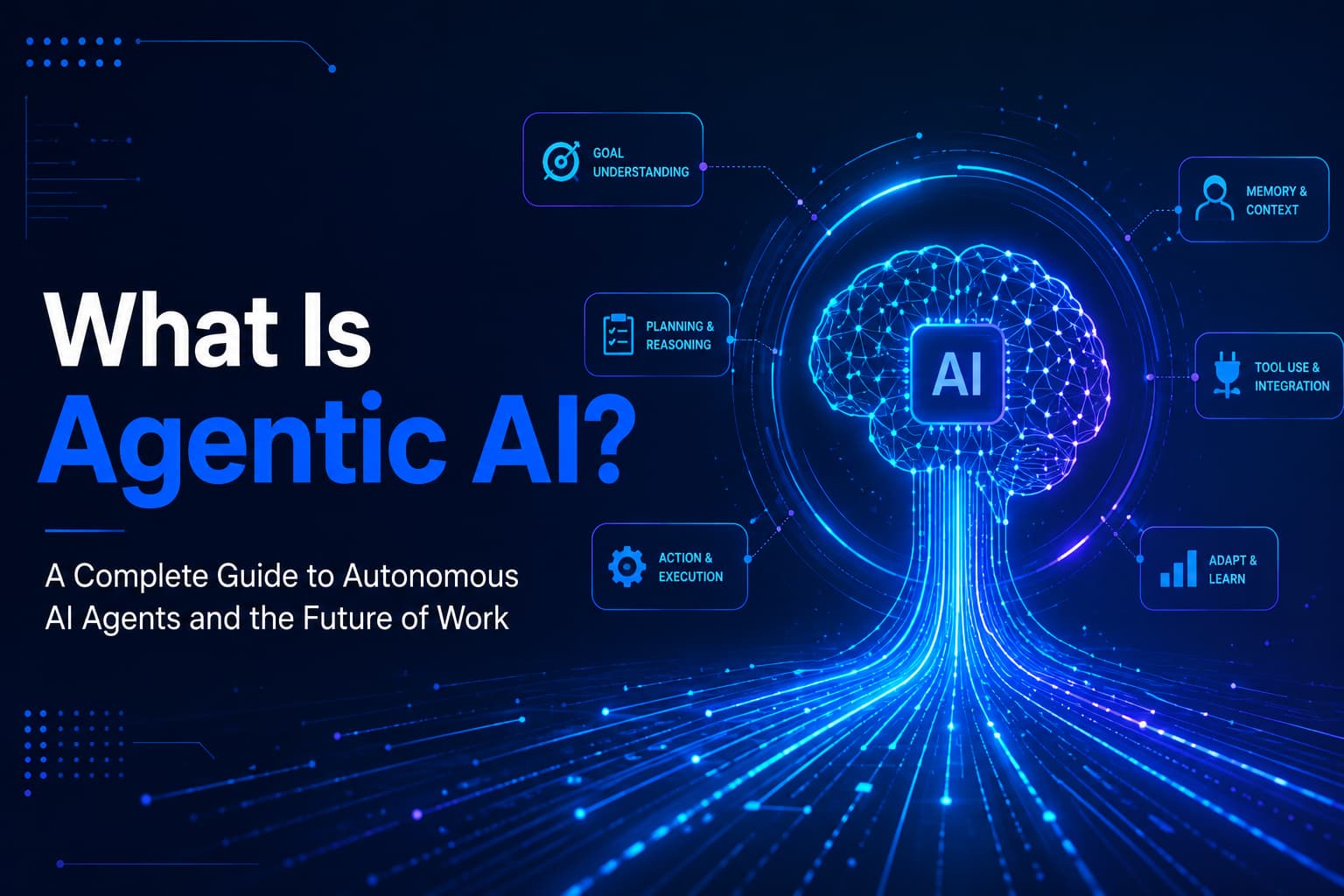
Agentic AI refers to artificial intelligence systems that can independently pursue goals, make decisions, and take actions to complete tasks with minimal human intervention. Unlike traditional AI tools that wait for specific prompts and return single answers, agentic AI works more like a capable assistant. You give it a goal, and it figures out the steps needed to achieve it.
Defining Agentic AI in Simple Terms
Think of agentic AI as software that has been given the ability to act. A regular AI model is like a brilliant consultant who answers questions when asked. An agentic AI system is more like an employee who takes a project, breaks it down, gathers what it needs, and delivers results. It can browse the web, use applications, call APIs, write code, and chain together dozens of steps to finish a job.
The keyword here is “agency.” The system can choose what to do next based on its understanding of the goal and the situation at hand.
The Meaning of “Agency” in Artificial Intelligence
In philosophy and psychology, agency means the capacity to act in the world. When we apply this concept to AI, we’re talking about systems that have enough autonomy to make meaningful choices. An agentic AI can decide that it needs more information before continuing, recognize when something has gone wrong, and adjust its approach without being told.
This is a significant shift. For decades, AI has been reactive. Agentic AI is proactive. It doesn’t just answer; it acts.
Why Agentic AI Is Gaining Attention in 2026
A few things have come together to make agentic AI suddenly possible at scale. Large language models have become powerful enough to reason about complex problems. Tool-use capabilities now let these models interact with real software. And companies have invested heavily in the infrastructure needed to run reliable agents in production.
The result is that what felt like science fiction two years ago is now showing up in everyday business tools. Coding assistants now write entire features. Research agents conduct hours of analysis. Customer service agents resolve tickets end-to-end.
Key Characteristics of an AI Agent
True agentic AI systems share a handful of defining traits. They are goal-oriented, meaning they work toward an outcome rather than producing a single output. They are autonomous, capable of making decisions without constant human direction. They use tools to interact with the world beyond their own model. They have memory, allowing them to maintain context across many steps. And they can self-correct, recognizing mistakes and trying again.
When you see all of these traits together, you’re looking at agentic AI.
2. The Evolution from Traditional AI to Agentic AI
Agentic AI didn’t appear out of nowhere. It’s the latest step in a decades-long journey to build software that can think and act intelligently. Understanding that history helps you see why this moment feels different.
Rule-Based Systems and Early Automation
The earliest AI systems followed strict rules written by humans. If a customer typed certain keywords, the system would respond with a pre-written answer. These rule-based systems worked well for narrow tasks but broke down quickly when anything unexpected happened. They couldn’t learn, adapt, or handle ambiguity.
This era also gave us robotic process automation, or RPA. These tools could click buttons and fill forms, but only when the steps were rigidly defined in advance.
The Rise of Machine Learning and Deep Learning
The next leap came when researchers began building systems that could learn from data rather than follow hand-written rules. Machine learning enabled AI to recognize patterns, classify images, and predict outcomes. Deep learning, powered by neural networks, pushed this further, enabling breakthroughs in voice recognition, computer vision, and language understanding.
These systems were impressive but still narrow. A model trained to recognize cats couldn’t suddenly translate languages. Each application needed its own dedicated model.
Generative AI and the LLM Revolution
Everything changed with the arrival of large language models. Suddenly, a single model could write essays, answer questions, generate code, summarize documents, and hold conversations. Generative AI tools like ChatGPT, Claude, and Gemini brought this capability to hundreds of millions of users.
But generative AI on its own has a limitation. It produces text, images, or audio when asked, but it doesn’t do anything in the world. You still have to take its output and act on it yourself.
The Shift Toward Autonomous, Goal-Driven AI
Agentic AI bridges that gap. By giving large language models access to tools, memory, and the ability to plan, developers have created systems that can carry out work, not just describe it. This shift from generating content to completing tasks is what makes agentic AI feel like a genuine step change rather than another incremental improvement.
3. Agentic AI vs Generative AI: Key Differences
People often use the terms generative AI and agentic AI interchangeably, but they refer to different concepts. Understanding the distinction matters because it affects what you can actually build and rely on.
What Generative AI Does Well (and Where It Stops)
Generative AI is exceptional at producing content. Need a blog post draft? A logo concept? A summary of a long document? A function in Python? Generative AI delivers in seconds. It excels at single-turn tasks where you provide input and receive output.
Where it stops is at the boundary of action. A generative model can tell you how to fix a bug in your code, but it can’t open your codebase, make the change, run the tests, and commit the fix unless something else makes that happen. That something else is agency.
How Agentic AI Goes Beyond Content Generation
Agentic AI adds three crucial capabilities to generative models: planning, tool use, and persistence. Planning lets the system break a vague goal into concrete steps. Tool use lets it interact with real software, websites, and data. Persistence lets it carry context across many steps and remember what it has already done.
With these capabilities, an agent can take a request like “find me five potential clients for my consulting business and draft outreach emails” and actually do it end-to-end.
Side-by-Side Comparison
Generative AI produces a single response per prompt; agentic AI completes a multi-step workflow. Generative AI is stateless by default; agentic AI maintains memory. Generative AI requires you to act on its output; agentic AI acts directly. Generative AI is great for content; agentic AI is great for tasks.
You can think of it this way: generative AI is the engine, and agentic AI is the car built around it.
When to Use Generative AI vs Agentic AI
Use generative AI when you need quick content, brainstorming, drafting, or one-off analysis. Use agentic AI when you have a multi-step process, need to interact with other tools, or need it to run without your constant attention. For simple creative tasks, generative AI is faster and cheaper. For real workflows, agentic AI saves vastly more time.
4. The Core Components of Agentic AI Systems
Every agentic AI system is built from a few essential building blocks. Get any of them wrong, and the agent won’t work reliably. Get them right, and you have a system that can handle remarkably complex jobs.
Goals and Decision-Making
At the heart of every agent is a goal. This might be something specific, like “summarize this 200-page report,” or something open-ended, like “improve our customer onboarding flow.” The agent’s job is to figure out what actions will move it closer to that goal and which won’t.
Good decision-making requires the agent to evaluate options, weigh tradeoffs, and commit to a course of action. The best systems also know when to stop, ask for help, or admit they can’t complete the task. This judgment is what separates a useful agent from one that loops forever or produces garbage.
Memory and Context Awareness
Without memory, an agent forgets everything between steps. Memory enables an agent to learn from past actions, remember user preferences, and build on previous work.
Short-Term vs Long-Term Memory
Short-term memory holds the immediate context of the current task, such as what the user just asked, what files are open, and what the agent has tried so far. This typically fits inside the model’s context window.
Long-term memory persists across sessions. It might store user preferences, completed projects, or facts about the world that the agent has learned. This usually lives in an external database, often a vector database that allows the agent to retrieve relevant memories on demand.
Why Context Retention Matters
An agent without good context awareness is frustrating to work with. It asks the same questions repeatedly, forgets your style, and makes the same mistakes. An agent with strong memory feels like a colleague who actually pays attention. This is one of the most important factors in whether users trust and continue to use an agentic system.
Planning and Task Execution
Planning is what turns a goal into action. When you tell an agent to “prepare a competitive analysis,” it has to figure out what that means in practice, what information it needs, and in what order to gather it.
Breaking Down Complex Goals into Subtasks
Most agents use a planning step where they decompose a big goal into smaller, manageable subtasks. They might create a checklist, set milestones, or build a dependency graph of steps. The quality of this planning often determines whether the whole task succeeds.
Self-Correction and Re-Planning
Real-world tasks rarely go according to plan. A website might be down. An API might return an error. A document might be in an unexpected format. Good agents recognize these problems and adjust. They might retry, try a different approach, or escalate to a human. Self-correction is what makes an agent feel resilient instead of fragile.
Tool Usage and Automation
Tools are how an agent extends beyond its own model to affect the world. Without tools, an agent can only think. With them, it can do.
APIs, Browsers, and External Systems
Common tools include web browsers, search engines, code execution environments, databases, email clients, calendars, and any service with an API. Modern agents can use dozens or even hundreds of tools, picking the right one for each step.
Function Calling Explained
Function calling is the mechanism that lets language models use tools. Instead of just generating text, the model can output a structured request to call a specific function with specific arguments. The runtime executes that function and returns the result back to the model, which then decides what to do next. This simple loop is the foundation of nearly every modern AI agent.
5. How Agentic AI Works Behind the Scenes
If you peek under the hood of an agentic AI system, you’ll find a surprisingly elegant pattern. The complexity comes not from any single component but from how they work together over many iterations.
The Perceive–Reason–Act Loop
Most agents follow a simple cycle. They perceive the current state of the world, including the user’s request and any new information. They reason about what to do next based on their goal and what they’ve learned. Then they act, either by producing output or calling a tool. After acting, they perceive the result and start the cycle again.
This loop continues until the goal is reached, the agent gives up, or it hits a time or resource limit. Everything else is just refinement on this basic pattern.
Prompt Engineering and Agent Instructions
The agent’s behavior is shaped by its system prompt, which acts as its instructions and personality. A well-crafted system prompt tells the agent who it is, what it can do, how to handle edge cases, and when to ask for help.
Writing good agent prompts is a discipline of its own. The best prompts are specific, give examples, define clear boundaries, and anticipate failure modes. A weak prompt leads to an agent that gets distracted, hallucinates, or refuses to act.
Reasoning Frameworks (ReAct, Chain-of-Thought, Tree-of-Thoughts)
Researchers have developed several frameworks to help agents reason more reliably. Chain-of-thought prompting encourages the model to think step by step rather than jumping to answers. ReAct combines reasoning with action, having the model alternate between thinking out loud and using tools. Tree-of-thoughts explores multiple possible paths before committing to one.
These aren’t separate technologies so much as different ways of structuring the model’s approach to problems. The right framework depends on the type of task and how much exploration is worth the cost.
Feedback Loops and Self-Reflection
The best agents check their own work. After taking an action, they evaluate whether the result actually moved them closer to the goal. If not, they reconsider. Some agents even run a separate evaluation step or use a second model to critique the first one’s output.
This self-reflection is what makes agents feel intelligent rather than mechanical. A system that notices its own mistakes is dramatically more useful than one that confidently produces wrong answers.
6. The Role of Large Language Models in Agentic AI
You can’t talk about agentic AI without talking about large language models. They are the engines that make modern agents possible, and their strengths and weaknesses define what agents can and can’t do.
Why LLMs Are the “Brain” of Modern Agents
Large language models have a unique combination of properties that make them ideal for agentic systems. They can understand natural language instructions, reason about abstract concepts, write code, generate plans, and decide which tool to use in a given situation. No previous AI technology could do all of these things in one system.
When you give an LLM tools and a feedback loop, you essentially get a flexible decision-making engine that can handle a huge variety of tasks without being specifically trained on any of them.
How LLMs Handle Reasoning and Planning
LLMs reason by generating text that walks through a problem. When you ask someone to plan a trip, it’s like an internal monologue: considering options, weighing factors, and arriving at a recommendation. This reasoning isn’t perfect, but it’s flexible in ways that traditional algorithms aren’t.
For planning, modern LLMs can lay out multi-step procedures, identify dependencies, and adapt when steps fail. The newest models are noticeably better at long-horizon planning than their predecessors, though they still struggle with tasks that require hundreds of steps without supervision.
Limitations of LLM-Powered Agents
LLMs come with real downsides. They hallucinate, meaning they sometimes generate confident-sounding information that’s simply wrong. They can be inconsistent, producing different answers to the same question. They’re expensive to run at scale. And they have context windows, which limit how much information they can hold at once.
Anyone building serious agentic systems has to design around these limitations. That usually means adding verification steps, using external memory, breaking tasks into smaller pieces, and keeping humans in the loop for high-stakes decisions.
The Difference Between an LLM and an AI Agent
It’s worth being clear: an LLM is not an agent. An LLM is a model that produces text. An agent is a system built around an LLM that uses it for decision-making, combined with tools, memory, and a control loop. You can have an LLM without an agent, but you can’t really have a useful modern agent without an LLM at its core.
7. Multi-Agent Systems and Collaborative AI
Sometimes one agent isn’t enough. For complex projects, multiple agents working together can outperform a single agent trying to do everything. This is the world of multi-agent systems, and it’s where some of the most interesting work in AI is happening right now.
What Is a Multi-Agent System?
A multi-agent system is a setup in which several AI agents work together on a problem. Each agent might specialize in a different role, contribute different skills, or handle a different part of the workflow. They communicate, share information, and coordinate to reach a shared goal.
Think of it like a small project team. One agent might do research, another write, a third review, and a fourth handle delivery. Each plays its part, and the result is better than what any one of them could produce alone.
How Multiple Agents Communicate and Cooperate
Agents typically communicate through structured messages, often passed through a central orchestrator or a shared memory space. They might use natural language, formal protocols, or a mix of both. The orchestrator decides who does what, when, and how conflicts are resolved.
Some systems use voting or consensus mechanisms when agents disagree. Others rely on a hierarchy where a lead agent makes final calls. The right design depends on the problem.
Roles, Hierarchies, and Specialization
Specialization is one of the biggest advantages of multi-agent systems. You can give each agent a focused prompt, a limited set of tools, and a narrow responsibility. This often yields better results than a single giant agent trying to be everything.
Common roles include planners, researchers, executors, critics, and synthesizers. A planner breaks down the task, researchers gather information, executors take action, critics review the work, and synthesizers combine outputs into a final result.
Real Examples of Multi-Agent Workflows
You can see multi-agent systems in action across many use cases. Software development teams of agents might include a coder, a tester, and a reviewer working on a single feature. Research workflows might pair a search agent with an analyst and a writer. Customer service might use one agent to classify tickets, another to draft responses, and a third to handle escalations.
These systems are still maturing, and getting them to work reliably is harder than it looks. But the potential is enormous.
8. Types of Agentic AI Systems
Not all agents are built the same way. Different problems call for different designs, and understanding the main types helps you pick the right approach for your needs.
Reactive Agents
Reactive agents respond directly to inputs without much internal deliberation. They follow patterns like “if I see X, do Y.” These agents are fast and simple but limited to situations their designers anticipated. Many early chatbots and simple automation tools fall into this category.
Deliberative (Goal-Based) Agents
Deliberative agents think before they act. They consider their current state, model how the world might change, and plan a sequence of actions to reach a goal. Most modern LLM-powered agents are deliberative. They’re slower than reactive agents but vastly more flexible.
Learning Agents
Learning agents improve over time. They observe the results of their actions, adjust their approach, and get better at their tasks. This might involve fine-tuning the underlying model, updating memory, or learning from human feedback. Learning agents are powerful but harder to build and control.
Hybrid and Multi-Agent Systems
Many real-world deployments combine multiple types. A system might use reactive logic for common cases, deliberative reasoning for novel ones, and learning to improve over time. Multi-agent setups, as covered earlier, can mix all three in different roles.
Human-in-the-Loop Agents
Some agents are designed to work alongside humans rather than fully autonomously. They handle the routine parts of a task and pause for human input on key decisions. This pattern is especially common in high-stakes domains like healthcare, finance, and legal work, where full autonomy isn’t acceptable.
9. Real-World Examples of Agentic AI
This isn’t theoretical anymore. Agentic AI is being used in production by companies of all sizes. Here are some of the places it’s showing up most visibly.
AI Coding Agents
Tools like Claude Code, Cursor, and other AI coding assistants have moved beyond autocomplete. They can read an entire codebase, understand the task, write new code across multiple files, run tests, fix failing ones, and submit pull requests. Developers increasingly delegate routine work to these agents, freeing them to focus on higher-level design and architecture.
Autonomous Research Assistants
Research agents can take a question and spend hours digging through sources, comparing perspectives, and producing a thorough report. They handle the kind of work that used to take a human analyst days. These tools are especially popular for market research, competitive analysis, and literature reviews.
Customer Service Agents
Modern customer service agents do more than answer FAQs. They can pull up account information, process refunds, schedule callbacks, escalate to specialists, and follow up after issues are resolved. The best ones operate around the clock and handle the majority of routine requests without human involvement.
Personal Productivity Agents
A growing category of agents handles personal tasks like managing your inbox, scheduling meetings, summarizing documents, and tracking projects. These act as a kind of digital chief of staff, taking care of the administrative work that eats into focused time.
Industry-Specific Use Cases
In healthcare, agents help with patient intake, medical research, and administrative tasks. In finance, they handle compliance checks, fraud detection, and portfolio analysis. In logistics, they optimize routes, track shipments, and coordinate with partners. Every major industry is finding ways to apply agentic AI to its specific challenges.
10. Popular Agentic AI Tools and Platforms
If you’re ready to build or experiment, you’ll find a healthy ecosystem of tools. Each has different strengths, and the right choice depends on what you’re trying to do.
Claude and the Claude Agent SDK
Claude, made by Anthropic, is widely used for agentic applications because of its strong reasoning, tool use, and long context window. The Claude Agent SDK provides developers with the building blocks to create agents, including support for function calling, multi-step workflows, and memory.
OpenAI’s Agent Tools and AutoGPT-Style Frameworks
OpenAI provides agent capabilities through its API, including function calling, assistants, and a growing set of agent-focused tools. Open-source projects like AutoGPT and BabyAGI pioneered many of the patterns that mainstream platforms now use.
LangChain and LangGraph
LangChain has become one of the most popular open-source frameworks for building LLM-powered applications, including agents. LangGraph, its newer companion library, focuses specifically on building stateful, multi-step agent workflows with explicit control over how steps connect.
Microsoft AutoGen and Semantic Kernel
Microsoft offers AutoGen for multi-agent conversations and Semantic Kernel for integrating LLMs into traditional software. These tools are especially popular in enterprise settings where Microsoft’s ecosystem is already in use.
CrewAI and Other Open-Source Frameworks
CrewAI focuses on multi-agent collaboration with role-based agents. Other notable frameworks include LlamaIndex for data-aware agents, Haystack for production-grade NLP applications, and DSPy for programmatic prompt optimization.
How to Compare These Platforms
When evaluating these tools, consider how easy they are to use, how well they handle production concerns such as reliability and observability, which models they support, how active their communities are, and whether they fit with the rest of your tech stack. There’s no single best choice. The right tool depends on your team and your use case.
11. How Businesses Are Using Agentic AI
Beyond demos and experiments, agentic AI is delivering real value in real businesses. Here’s how it’s showing up across common functions.
Customer Support
24/7 Automated Resolution
Agentic systems can handle customer queries at any hour, resolving most common issues without human intervention. They look up order status, process returns, update account details, and walk customers through troubleshooting. This dramatically reduces wait times and the load on human support teams.
Escalation and Human Handoff
Smart agents know their limits. When a request is too complex, sensitive, or unusual, they hand off to a human with full context already gathered. This keeps the human’s job focused on the cases that actually need their judgment, rather than starting every conversation from scratch.
Marketing and SEO
Content Research and Generation Workflows
Digital Marketing teams use agents to research topics, analyze competitors, draft articles, and generate variations for testing. A single agent can produce a content brief, draft, and outline in less time than it takes a person to start a blank document.
SEO Audits and Competitive Analysis
Agents excel at the kind of repetitive analysis SEO requires. They can crawl sites, check rankings, identify gaps, and produce reports with recommendations. Teams that used to spend a week on a quarterly audit can now have one running continuously.
Software Development
Code Generation, Review, and Debugging
Developers use agents to write boilerplate, refactor legacy code, suggest bug fixes, and review pull requests. The productivity gains for routine coding work are substantial, especially for teams that have integrated agents into their development workflow.
Autonomous Pull Request Workflows
More ambitious setups have agents handling entire feature requests. The agent receives a ticket, plans the work, writes the code, runs tests, and submits a pull request for human review. Even when humans still review the final result, the heavy lifting is done by the agent.
Research and Data Analysis
Literature Reviews and Summarization
Researchers in academia and industry use agents to read papers, extract key findings, and synthesize insights across sources. What used to take days can now happen in hours, freeing researchers to focus on novel thinking rather than information gathering.
Automated Data Cleaning and Reporting
Data teams use agents to clean messy datasets, generate reports, and build dashboards. The agent can identify anomalies, suggest fixes, and produce visualizations that would normally require a dedicated analyst.
Workflow Automation
Connecting Tools Across the Tech Stack
Agents serve as glue between business applications. They can pull data from one system, transform it, and push it to another, handling the kind of integration work that used to require custom code or specialized tools.
Replacing Traditional RPA
Older robotic process automation tools required strict rules and broke easily when interfaces changed. Agentic AI handles the same workflows more flexibly, adapting to small changes and managing exceptions without breaking.
12. Benefits of Agentic AI
The reason agentic AI is getting so much attention is that it delivers concrete, measurable benefits to people and organizations that use it well.
Increased Productivity and Efficiency
The most obvious benefit is speed. Tasks that used to take hours can take minutes. Agents work continuously, don’t get distracted, and don’t need coffee breaks. For knowledge work especially, this productivity boost is significant.
24/7 Operation and Scalability
Unlike human teams, agents can work around the clock without overtime pay or burnout. They scale up to handle spikes in demand and scale down when things are quiet. This makes them especially valuable for global businesses serving customers in many time zones.
Reduced Human Error
For repetitive tasks, agents are more consistent than people. They don’t get tired, lose focus, or make typos. While they can still make mistakes, those mistakes tend to differ from human ones and are often easier to catch with the right checks in place.
Faster Decision-Making
Agents can analyze information and recommend actions much faster than people working through the same data. For time-sensitive decisions like fraud detection, supply chain adjustments, or customer escalations, this speed can be the difference between success and failure.
Cost Savings for Businesses
Done well, agentic AI reduces operational costs. Fewer hours spent on routine work, less overtime, lower error rates, and better use of expensive human expertise all contribute to a healthier bottom line. The savings often pay for the technology many times over.
13. Limitations of Today’s Agentic AI
For all the hype, agentic AI is far from perfect. Anyone planning to use it should understand exactly where it falls short today.
Hallucinations and Reasoning Errors
LLMs sometimes make things up, confidently stating facts that aren’t true or following reasoning chains that lead nowhere useful. Even the best models do this. In agentic systems, a single hallucination can cascade into a series of bad decisions if the agent doesn’t catch itself.
Struggles with Long-Horizon Tasks
Agents tend to lose focus or drift off track on tasks that involve dozens or hundreds of steps. They might forget earlier context, get stuck in loops, or pursue a sub-goal that no longer serves the original objective. Long-horizon reliability is one of the biggest open problems in agentic AI.
High Computational and API Costs
Running agents isn’t cheap. Each step requires a model call, and complex tasks can involve hundreds of calls. Costs add up quickly, especially when using top-tier models. Some workflows that seem like obvious wins turn out to be too expensive to run at scale.
Reliability and Consistency Issues
Agents can produce different results on different runs of the same task. This variability makes them tricky to deploy in situations where consistency matters. Engineering teams spend significant effort building evaluation systems to measure and improve reliability.
Why Most Agents Still Need Supervision
Because of all the above, most production agents still need a human in the loop for important decisions or final approval. Fully autonomous agents are appropriate for low-stakes tasks but rarely trusted with decisions that have major consequences.
14. Challenges and Risks of Autonomous AI Systems
Beyond the technical limitations, agentic AI raises real challenges around safety, trust, and accountability. These are worth taking seriously.
Unpredictable Behavior in Edge Cases
Agents can behave in unexpected ways when they encounter situations outside their training. They might take actions their designers never anticipated, especially when given broad access to tools. This unpredictability is one of the reasons safety researchers urge caution about deploying agents too aggressively.
Data Privacy and Compliance Risks
Agents handle a lot of sensitive data. If not designed carefully, they can leak information through prompts, store data in inappropriate locations, or violate regulations such as the GDPR. Privacy and compliance need to be built in from the start, not bolted on later.
Cascading Failures in Multi-Agent Systems
When agents work together, errors can compound. One agent’s wrong assumption becomes another agent’s input, leading to outputs that look plausible but are deeply flawed. Building robust multi-agent systems requires careful design to prevent these cascades.
Over-Reliance and Skill Atrophy
When people delegate cognitive work to agents, their own skills can atrophy. Junior developers who rely on AI for every line of code may not build the deep understanding they need to lead projects later. Organizations need to think about how to use agents as a complement to human skill development, not a replacement for it.
Accountability When Agents Make Mistakes
If an agent makes a bad decision, who’s responsible? The developer who built it? The company that deployed it? The user who prompted it? Legal and ethical frameworks for AI accountability are still being worked out, and these questions matter especially in regulated industries.
15. Security, Ethics, and Human Oversight
Building agentic systems responsibly requires careful consideration of security, ethics, and oversight from day one.
Prompt Injection and Agent Hijacking
Prompt injection is a class of attacks where malicious content in an agent’s input causes it to behave in unintended ways. An attacker might embed instructions in a website, document, or email that the agent reads, attempting to cause it to leak data or take harmful actions. Defending against these attacks is an active area of research.
Building Guardrails and Permission Systems
Well-designed agents have strict boundaries. They can access only certain tools, see only certain data, and take only certain actions without human approval. These guardrails limit how much damage a misbehaving agent can do.
Ethical Considerations in Autonomous Decision-Making
When agents make decisions that affect people, ethics matters. Bias in training data can lead to unfair outcomes. Opaque decision-making can leave affected people without recourse. Building ethical agents requires diverse teams, careful testing, and clear policies about what agents should and shouldn’t do.
The Importance of Human-in-the-Loop Design
For high-stakes decisions, keeping a human in the loop isn’t just safer; it’s often required. The best designs make it easy for humans to review, override, and learn from agent decisions, treating the agent as a powerful assistant rather than a replacement for human judgment.
Emerging Regulations and Standards
Governments around the world are starting to regulate AI more carefully. The EU’s AI Act, US executive orders, and emerging standards from organizations such as NIST are shaping how agents are built and deployed. Staying current on these regulations is increasingly important for anyone building serious agentic applications.
16. Will Agentic AI Replace Human Jobs?
This is one of the most common and important questions people ask about agentic AI. The honest answer is nuanced.
Tasks Most Likely to Be Automated
Routine cognitive work is at the greatest risk. This includes simple research, basic content production, data entry and cleanup, scheduling, first-line customer support, and many administrative tasks. If a job consists mostly of these activities, it will likely change significantly in the next few years.
Roles That Will Evolve Rather Than Disappear
Most jobs won’t disappear entirely. Instead, they’ll change as agents handle routine parts and humans focus on judgment, creativity, relationships, and complex problem-solving. A marketing manager won’t be replaced by an agent, but their role will shift toward strategy and oversight while agents handle execution.
New Jobs Created by Agentic AI
New roles are emerging around building, training, and supervising agents. AI engineers, prompt designers, agent operators, and AI ethics specialists are now in high demand. Just like previous technology waves created new industries, agentic AI is creating its own.
How Workers Can Adapt and Stay Relevant
The best advice for anyone worried about AI replacing their job is to learn to work with it. Understanding what agents can and can’t do, knowing how to direct them effectively, and developing skills that complement them all increase your value. The people who thrive in this era will be those who use AI as a force multiplier rather than competing with it directly.
17. The Future of Agentic AI
Predicting the future of any technology is risky, but some trends in agentic AI are clear enough to make educated guesses.
Trends to Watch in the Next 2 to 5 Years
Expect agents to become more reliable, more affordable, and more capable. Long-horizon planning will improve. Models will get better at knowing when they don’t know something. Tool ecosystems will mature, making it easier to provide agents with the systems they need. Specialized agents for specific domains will become common.
The Move Toward Persistent, Always-On Agents
Today’s agents mostly run on demand. Tomorrow’s will run continuously, monitoring your inbox, watching your projects, and acting on your behalf around the clock. This shift from “ask and receive” to “ambient assistance” is already beginning.
Agent-to-Agent Economies and Protocols
A fascinating area of research is how agents will interact with each other across organizations. Imagine your scheduling agent negotiating with another agent to find a meeting time. Or a procurement agent dealing directly with a supplier’s sales agent. New protocols for agent-to-agent communication will likely emerge.
Integration With Robotics and IoT
Agentic AI isn’t limited to software. When combined with robotics and connected devices, it can operate in the physical world. Expect to see agents controlling smart homes, factory equipment, vehicles, and more. The boundary between digital and physical agents will blur.
Predictions From Industry Leaders
Most industry leaders agree that the next few years will bring dramatic changes. Some predict agents will be capable of doing weeks of work autonomously by the end of the decade. Others are more cautious. Either way, the trajectory points toward agents becoming a fundamental part of how work gets done.
18. How to Choose the Right Agentic AI Tool
With so many options, picking the right tool can feel overwhelming. A structured approach helps.
Define Your Use Case First
Start with the problem, not the technology. What specific task or workflow do you want to automate? Who are the users? What does success look like? A clear use case will eliminate most options immediately and make the rest easier to compare.
Open-Source vs Commercial Platforms
Open-source tools offer more flexibility, no licensing fees, and full control over your data. Commercial platforms offer faster setup, built-in support, and often better reliability out of the box. Many organizations use both, choosing based on the specific use case.
Key Features to Look For
Important features include the quality of the underlying model, support for the tools you need, memory and state management, multi-agent capabilities, evaluation and monitoring, and ease of integration with your existing systems. The right mix depends on your use case.
Pricing, Scalability, and Vendor Lock-In
Watch for hidden costs. Per-token pricing can add up fast. Some platforms charge for memory, vector storage, or compute in addition to model usage. Also consider how easy it is to switch providers if needed. Heavy lock-in to one platform can become a problem later.
Security and Compliance Checklist
For business use, security and compliance are non-negotiable. Look at data handling practices, encryption, access controls, audit logs, and certifications like SOC 2 or ISO 27001. If you’re in a regulated industry, make sure the platform meets your specific requirements.
19. How to Get Started With Agentic AI
If you’re ready to actually build something, here’s a practical path forward.
Step 1: Identify a High-Value Workflow
Look for a workflow that’s repetitive, time-consuming, and well-defined. Avoid trying to automate something vague or strategic on your first attempt. Pick something small enough to ship but valuable enough to matter.
Step 2: Choose Your Framework or Platform
Based on your use case and team skills, pick one of the platforms covered earlier. Don’t agonize over this choice. The skills you build transfer between platforms, and switching is rarely as hard as people fear.
Step 3: Build a Simple Single-Agent Prototype
Start with one agent doing one task. Don’t try to build a complex multi-agent system on day one. Get the basics working, test it on real examples, and learn what breaks. This grounded experience is more valuable than any amount of planning.
Step 4: Add Tools, Memory, and Guardrails
Once your prototype works for simple cases, gradually add capabilities. Give it more tools as needed. Add memory so it can build on past interactions. Build in guardrails to prevent it from doing things you don’t want. Each addition should be tested before moving on.
Step 5: Test, Iterate, and Scale Up
Treat your agent like any other software. Build evaluation suites that test its behavior on representative tasks. Monitor it in production. Iterate based on real user feedback. Only scale up once you trust it on the basics.
Beginner-Friendly Resources and Courses
Plenty of free and paid resources can help you learn faster. Documentation from Anthropic, OpenAI, and other major providers is a good starting point. Online courses from DeepLearning.AI, Coursera, and others cover both the theory and practice. Open-source projects on GitHub provide working examples to learn from.
20. Frequently Asked Questions About Agentic AI
A few common questions come up repeatedly, so let’s address them directly.
Is Agentic AI the Same as AGI?
No. AGI, or artificial general intelligence, refers to AI that matches or exceeds human intelligence across essentially all tasks. Agentic AI refers to systems that can act autonomously toward goals, but they’re nowhere near generally intelligent. A coding agent might be impressive at writing code while being completely useless at, say, understanding human emotions.
Can Agentic AI Work Without an LLM?
Technically, yes, but practically, the most capable modern agents rely on large language models. Older agents based on rule systems or narrow ML models exist, but the flexibility and reasoning needed for general-purpose agents come from LLMs today.
How Much Does It Cost to Build an AI Agent?
Costs vary wildly. A simple prototype using existing APIs might cost a few dollars to test. A production-grade agent serving thousands of users could cost thousands per month in API fees alone, plus development and infrastructure costs. Build a small version first and measure before committing to a big budget.
Is Agentic AI Safe to Use in Production?
It depends on the use case and how it’s designed. For low-stakes tasks with appropriate guardrails, yes. For high-stakes decisions affecting health, finances, or legal status, they should be made only with significant human oversight and careful validation. Always start small and expand cautiously.
How Does Agentic AI Affect Search Engine Visibility for Businesses?
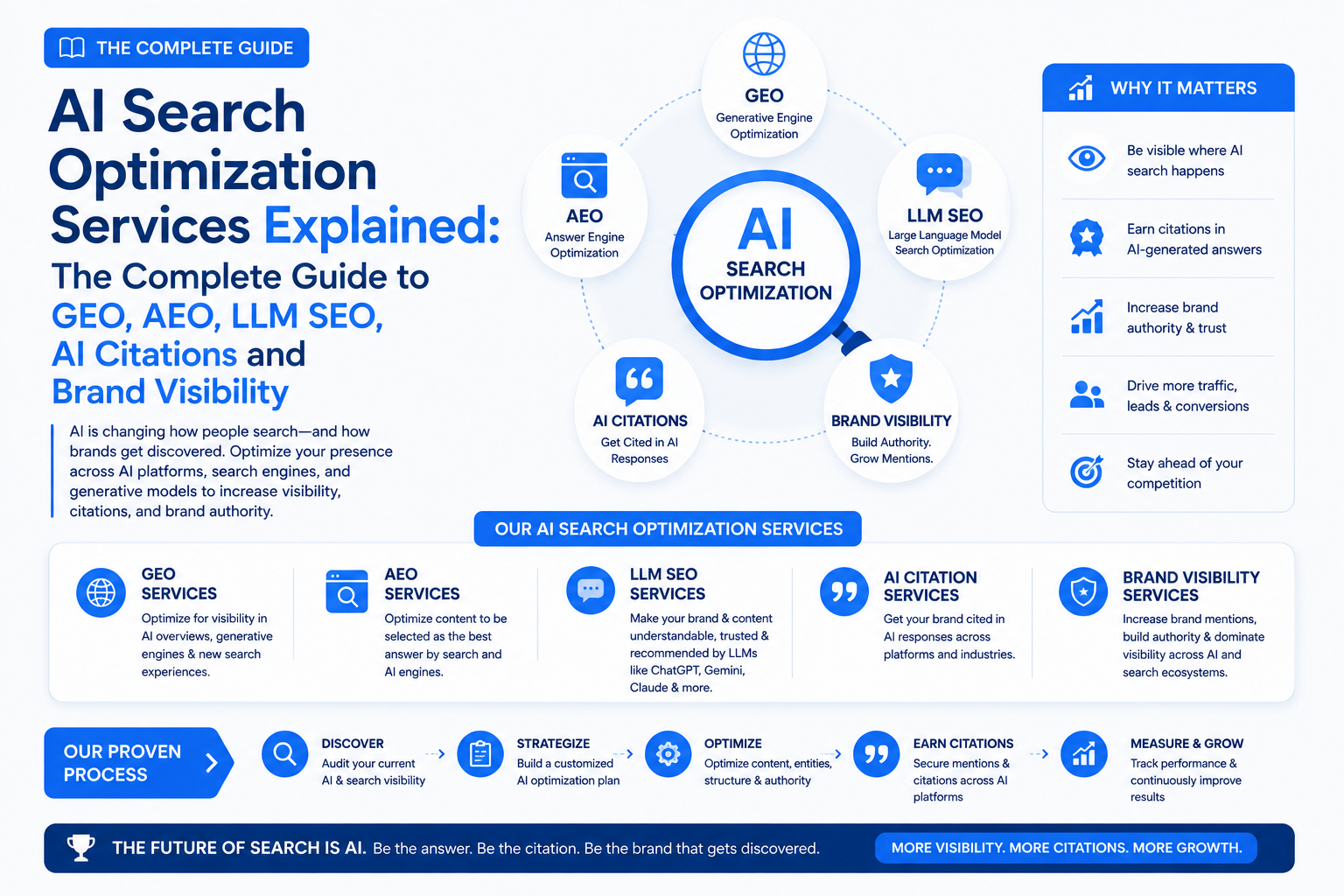
Agentic AI is changing how people find information. Instead of browsing search results, users now ask AI agents to research and recommend options. This means businesses need to be discoverable not just by Google but also by AI models and autonomous agents. This practice is known as AI search visibility, generative engine optimization (GEO), or answer engine optimization (AEO). It focuses on creating well-structured, authoritative content that AI agents can easily find, understand, and recommend. To learn more, check out this guide on AI search visibility services by Megrisoft, which covers practical strategies brands are using to appear in AI-generated answers today.
What Skills Do I Need to Build with Agentic AI?
Programming skills, especially in Python or JavaScript, are the foundation. Beyond that, understanding how LLMs work, prompt design, system architecture, and basic ML concepts all help. Soft skills like clear thinking, problem decomposition, and good written communication are surprisingly important too, since you’ll spend a lot of time telling agents what to do.
21. Final Thoughts
Agentic AI: The Next Leap Beyond ChatGPT and Generative AI
Agentic AI is one of the most important technology shifts of our time. It changes what software can do, what work looks like, and how humans and machines work together. The pace of progress is fast, and the implications are still unfolding.
Key Takeaways for Readers
A few things are worth remembering. Agentic AI is not magic. It’s powerful but imperfect, and it works best when you understand both its strengths and its limits. The technology is real and already delivering value, but the biggest gains come from thoughtful design, not from throwing AI at every problem.
Why Now Is the Time to Learn About Agentic AI
Whether you’re a developer, business leader, or curious learner, building familiarity with agentic AI now pays dividends. The people and organizations that develop genuine expertise early will have outsized advantages as this technology matures. Waiting until everything is settled means missing the formative period when the best practices are still being worked out.
The Road Ahead for Autonomous Systems
The road ahead will bring more capable agents, more interesting applications, and more challenging questions about how to use this technology responsibly. The technology will keep improving. The question is whether we use it to genuinely help people and solve real problems, or whether we let hype and recklessness lead us astray.
The future of autonomous systems isn’t something that will happen to us. It’s something we’re building, one decision at a time. Understanding agentic AI is the first step in shaping that future thoughtfully.
Top 5 Resources to Learn More About Agentic AI
If you want to go deeper after reading this guide, these are five of the best places to continue your learning journey. They range from free hands-on courses to comprehensive written guides, so there’s something for every level and learning style.
1. DeepLearning.AI – Agentic AI Specialization Created by Andrew Ng and his team, this is one of the most respected free resources for understanding how to build AI agents from the ground up. The lessons cover reasoning, planning, tool use, and multi-agent systems with practical coding examples. 🔗 https://www.deeplearning.ai
2. Hugging Face – AI Agents Course A free, beginner-friendly course that walks you through building real AI agents using popular open-source frameworks. It includes hands-on notebooks, community support, and certification on completion. 🔗 https://huggingface.co/learn
3. LangChain Academy The official training hub from the team behind LangChain and LangGraph, two of the most widely used frameworks for building production-grade AI agents. Excellent for developers who want to learn the tools that power real-world agentic systems. 🔗 https://academy.langchain.com
4. Anthropic’s Documentation and Cookbook Anthropic provides clear, well-written guides on building agents with Claude, including the Claude Agent SDK, tool use patterns, and best practices for reliability. A must-read for anyone building serious agent applications. 🔗 https://docs.claude.com
5. The Roadmap for Mastering Agentic AI – Machine Learning Mastery A practical, structured roadmap that takes you from foundational concepts to deploying production-grade agents. It’s especially useful if you prefer a self-paced learning path with curated resources at each step. 🔗 https://machinelearningmastery.com/the-roadmap-for-mastering-agentic-ai-in-2026/
Bookmark these and work through them at your own pace. The field is moving quickly, so following the official documentation from major providers like Anthropic, OpenAI, and Hugging Face is one of the best ways to stay current.
Ready to Make Your Brand Visible in the Age of Agentic AI?
As AI agents take over how people search, shop, and decide, being recommended by them is the new competitive edge. Megrisoft helps businesses get discovered by AI agents and chat tools like ChatGPT, Claude, Gemini, and Perplexity through expert Agentic AI and AI Chat Visibility services.
👉 Get in touch with Megrisoft today and future-proof your brand for the AI-driven web.
1

Leave a Comment