

Your backlink profile is strong. Your rankings look solid. So why is your brand invisible in Google’s AI Overviews and ChatGPT responses?
Because links are only half the equation.
Modern search runs on two trust signals: link authority and brand mention presence. Most brands optimize for one and ignore the other. That gap is costing you visibility where it matters most.
Here is how to close it.
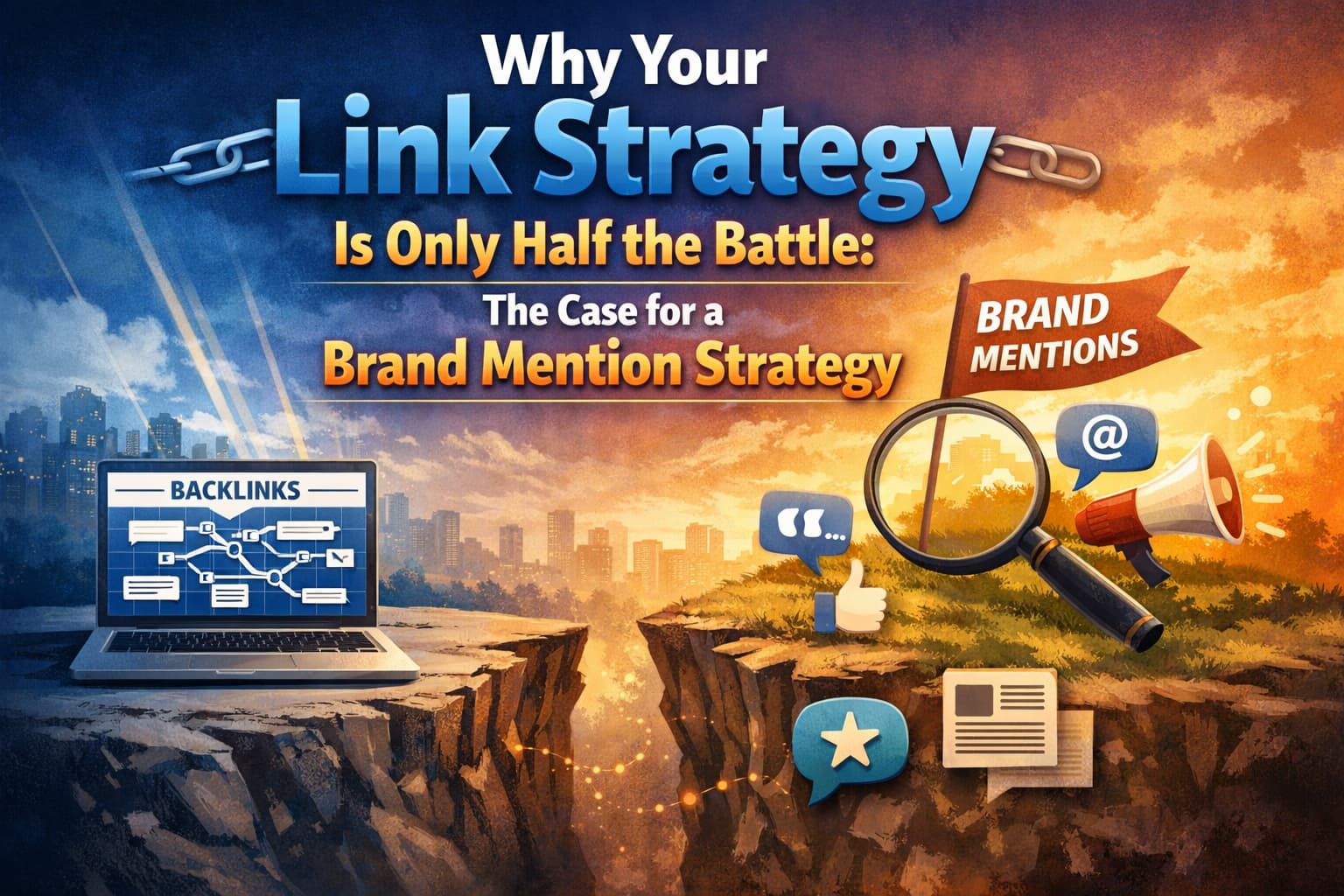
Links Prove Authority. Mentions Prove Presence. Here Is Why You Need to Build Both.
Introduction: The Trust Signal You Are Ignoring
Most SEO strategies are built around a single promise: earn enough backlinks, and your rankings will follow. For years, that logic held up. Links were the internet’s original trust signal, a vote of confidence passed from one domain to another, a way for search engines to map authority across the web.
But search has changed. Google is no longer just a link-counting machine. It is an intent-understanding, entity-recognizing, AI-powered answer engine. And the signals it uses to decide who gets visibility have expanded well beyond the backlink.
Today, two trust signals shape your search presence. The first is link authority — how many credible domains point to you. The second is brand mention presence — how often real editorial voices across the web talk about you, reference you, and associate your name with the topics that matter to your business.
Most brands are optimizing hard for the first signal. Almost none have a deliberate strategy for the second. That gap is where visibility is being lost right now, not just in traditional search results but in Google’s AI Overviews, in ChatGPT responses, in Perplexity answers, and in every AI-generated summary that a potential customer reads instead of clicking through to a website.
This article explains both signals, why they work differently, and exactly how to build a strategy that captures both at the same time.
1. The Two Trust Signals Search Engines Actually Use
Search engines use two distinct types of signals to evaluate your brand’s credibility: backlinks that transfer domain authority, and brand mentions that signal editorial presence. Both matter. Most brands only build one.
To understand why both signals exist, you need to understand how search engines have evolved.
In the early days of Google, PageRank was everything. The algorithm was elegantly simple: if a credible website linked to you, some of that credibility transferred to your domain. The more high-quality links you earn, the more authoritative your site appears, and the better you rank.
That model worked well when the web was smaller, and link manipulation was harder. But as SEO became an industry, link-building became a game. Brands bought links, traded links, and built entire networks of sites designed purely to pass authority. Google responded with Penguin, Panda, and a series of algorithm updates that punished manipulation and rewarded genuine editorial endorsement.
But something else was happening in parallel. Google was getting smarter about language. With the introduction of Hummingbird in 2013, RankBrain in 2015, BERT in 2019, and MUM in 2021, Google shifted from keyword matching to semantic understanding. It started reading context. It started recognizing entities. It started to understand that a brand being discussed across authoritative publications was a signal of credibility, even when no link was present.
This is the foundation of the two-signal model:
| Signal Type | What It Measures | How It Works |
|---|---|---|
| Backlink Authority | Domain trust transfer | PageRank flows from linking your domain to yours |
| Brand Mention Presence | Editorial credibility | Entity recognition reads the co-occurrence of your brand with trusted topics |
| Combined Profile | Full visibility | Ranks in traditional search AND gets cited in AI Overviews |
The brands winning visibility today are not just those with the most links. They are the brands that show up in both columns of that table.
2. What a Backlink Actually Does (and What It Cannot Do)
A backlink transfers authority from one domain to yours, improving your site’s credibility in Google’s ranking system. But links alone cannot establish your brand as a recognized entity in AI-driven search — and that ceiling is becoming more costly to ignore.
Here is what a backlink does well:
- It passes PageRank, the foundational authority metric Google uses to evaluate domain strength
- It signals editorial endorsement, especially when the linking page is relevant and authoritative
- It drives referral traffic directly, independent of search rankings
- It helps Google discover new pages on your site through crawl pathways
- It establishes topical relevance when the anchor text and surrounding content match your target subjects
These are real, meaningful benefits. A strong backlink profile is still one of the most important factors in traditional search rankings. No serious SEO strategy should abandon link-building.
But here is what a backlink cannot do:
It cannot make your brand a recognized entity on its own. Google’s Knowledge Graph, which powers entity recognition in AI Overviews, is built on patterns of co-occurrence across the web. Your brand needs to be talked about, described, and associated with topics — not just linked to.
It cannot build the conversational presence that AI systems draw on. When ChatGPT, Perplexity, or Google’s AI Overviews generate a response about a topic in your industry, they pull from a corpus of editorial content. If your brand appears in that content as a subject of discussion, you have presence. A link buried in a footer or resource page does not create that kind of editorial association.
It has diminishing returns at scale. The hundredth link from a mid-authority domain moves the needle far less than the first ten links from high-authority domains. Once your backlink profile reaches a competitive baseline, additional links yield diminishing returns in ranking improvements.
It can be replicated by competitors. Any link your competitor earns, you can theoretically earn too. Link profiles are visible, analyzable, and systematically reproducible. They create authority but not differentiation.
This is the hard ceiling of a link-only strategy. You can build a strong domain. You can rank for competitive terms. But if editorial voices across the web are not organically discussing your brand, you are invisible to the layer of AI-driven search that is growing fastest.
3. What a Brand Mention Tells Google and AI Systems
A brand mention signals to Google and AI systems that real editorial voices independently recognize your brand as relevant to a topic. This type of signal is processed through entity recognition and topical co-occurrence analysis, and it directly influences AI Overview citations and generative search responses.
To understand why this matters, you need to understand how Google processes unlinked mentions.
Google’s natural language processing systems do not just follow links. They read content. When a journalist writes an article about the best project management tools and mentions your brand by name alongside established players in your space, Google’s systems register several things:
- Your brand name appears in a credible editorial context
- It is associated with the topic “project management tools.”
- It is co-mentioned with other recognized entities in that category
- The publication carrying that content has its own authority score
- The mention is organic, not paid or self-published
Each of these data points contributes to what Google’s systems understand about your brand as an entity. Over time, as these signals accumulate across multiple publications, your brand becomes more firmly associated with your target topics in Google’s understanding of the web.
This process is called entity establishment. It is how Google decides whether your brand belongs in AI-generated answers about a given topic.
How AI Overviews Use Brand Mentions Specifically
Google’s AI Overviews do not simply rank the highest-authority domains and summarize them. They synthesize information from multiple sources and cite the sources that most clearly and credibly address the user’s query.
For a brand to be cited in an AI Overview, several conditions typically need to be met:
- The brand must be recognized as a legitimate entity associated with the topic
- Multiple credible sources must reference the brand in relevant contexts
- The brand’s own content must align with how external sources describe it
- The brand’s mentions must span a range of publication types, not just one or two sources
A single strong backlink from a high-DA domain will not achieve this. What achieves this is a pattern of editorial mentions across multiple trusted publications, each contributing to Google’s understanding that your brand is a recognized, credible voice in your space.
How LLMs Like ChatGPT Process Brand Mentions
Large language models are trained on vast corpora of web content. The brands, products, and services that appear most frequently in high-quality editorial content are the ones that get embedded most deeply into the model’s understanding of a topic.
When someone asks ChatGPT, “What are the best tools for email marketing?” and your brand has been consistently mentioned in editorial articles, comparison posts, and expert roundups across authoritative publications, your brand is much more likely to appear in that response.
This is not SEO in the traditional sense. It is corpus presence. And it is built through mentions, not links.
4. The Visibility Gap: Why Most Brands Are Only Half Visible
The visibility gap is the difference between ranking well in traditional search and being present in AI-generated answers. Brands with strong link profiles but weak mention strategies are increasingly invisible to the fastest-growing segment of search behavior.
Consider what this looks like in practice.
A brand in the B2B SaaS space has spent three years building a strong backlink profile. They have links from industry publications, guest posts on respected blogs, and a domain authority score that puts them in a competitive position for their target keywords. Their traditional rankings are solid.
But when a potential customer opens Google and searches for a solution to their problem, an AI Overview appears at the top of the page. That overview cites four tools. Your brand is not one of them.
The customer reads the AI summary. They click through to one of the cited sources. They evaluate the four recommended tools. Your brand never enters their consideration set, despite ranking on page one of the organic results below the fold.
This is the visibility gap. It is happening right now, across every industry, to brands that have invested heavily in traditional SEO without building their mention presence.
The Numbers Behind the Shift
The scale of AI-driven search behavior is accelerating rapidly:
- Google’s AI Overviews now appear on a significant portion of informational and commercial queries
- ChatGPT processes hundreds of millions of queries per week, many of them product and service research questions
- Perplexity, Claude, Gemini, and other AI-powered search tools are collectively handling a growing share of research queries that previously went through traditional search
- Studies show that AI Overview results receive significant click-through engagement before users scroll to organic listings
The brands that are winning in this environment have not abandoned traditional SEO. They have added a second layer: a deliberate strategy to generate editorial mentions that build entity recognition and corpus presence across the publications that AI systems draw on.
5. How Google’s AI Overviews Read Brand Mentions
Google’s AI Overviews use a combination of entity recognition, topical authority signals, and editorial co-occurrence patterns to select which brands and sources to cite. Being consistently mentioned in credible editorial content is one of the clearest pathways to inclusion in AI Overview.
Here is the process in more detail.
Entity Recognition
Google maintains a Knowledge Graph — a vast database of entities (people, places, brands, products, concepts) and the relationships between them. For your brand to appear in AI Overviews, it typically needs to be a recognized entity in this graph, associated with relevant topics and categories.
Entity recognition is built through signals like:
- Wikipedia or Wikidata entries
- Consistent brand name mentions across authoritative domains
- Knowledge panel presence in Google Search
- Structured data on your own site
- Editorial content that consistently describes your brand in the same topical context
The more consistently editorial sources describe your brand in relation to your target topics, the stronger your entity signals become.
Topical Co-occurrence
Beyond entity recognition, Google’s systems analyze patterns of co-occurrence. If your brand name consistently appears in content alongside authoritative terms, trusted competitor names, and expert-level discussion of your topic, that pattern contributes to your topical authority in Google’s semantic model.
This is why being mentioned in the same breath as established players in your industry is genuinely valuable, even without a link. The co-occurrence itself is a signal.
Source Authority Weighting
Not all mentions carry equal weight. A mention in a major national publication carries more signal value than a mention in a low-traffic blog. Google’s systems weigh editorial mentions based on the source’s authority and trustworthiness, which is why the quality and prestige of publications that mention your brand matter significantly.
Recency and Velocity
AI systems also consider how recently and how frequently your brand has been mentioned. A brand generating consistent fresh mentions across authoritative sources signals ongoing relevance. A brand with a strong mention history from three years ago, but nothing recent, may see its entity signals decay.
6. E-E-A-T and the Mention Layer
Brand mentions directly strengthen Google’s E-E-A-T assessment of your brand. When independent editorial voices discuss your brand, they provide third-party validation of your Experience, Expertise, Authority, and Trust — the four factors Google uses to evaluate content quality and source credibility.
Google’s E-E-A-T framework was designed to answer one fundamental question: Can this source be trusted to provide accurate, credible, helpful information on this topic?
Here is how brand mentions map to each component:
Experience
Experience signals come from evidence that your brand has real, practical involvement in the topic it discusses. When editorial sources mention your brand in the context of specific projects, client results, case studies, or industry involvement, they are providing third-party validation of your experience. This is far more credible than self-reported claims on your own website.
A journalist writing “Brand X, which has worked with over 500 enterprise clients on cybersecurity implementation, recommends the following approach” is providing an experience signal that no amount of self-published content can replicate.
Expertise
Expertise signals come from association with authoritative knowledge. When your brand is quoted, cited, or mentioned alongside industry experts, in technical publications, or in the context of specialized knowledge, those mentions contribute to Google’s assessment of your expertise level.
Being named in expert roundups, cited in research summaries, or mentioned as a reference point in technical articles all contribute to this signal.
Authority
Authority is perhaps the most directly connected to brand mentions. When multiple independent, credible sources cite your brand as a leader, innovator, or significant player in your space, that convergent endorsement is a powerful signal of authority. It is the difference between claiming authority and having authority attributed to you.
Trust
Trust signals come from the consistency and credibility of what is said about your brand across sources. Positive editorial coverage from trusted publications, neutral-but-credible mentions in industry analysis, and consistent representation across a range of source types all contribute to trust signals.
Negative coverage or a conspicuous absence of third-party mentions, on the other hand, can be a trust signal in the wrong direction.
The E-E-A-T Multiplier Effect
When your brand mention strategy is working well, it creates a multiplier effect on your E-E-A-T profile. Each new mention from a credible source reinforces the signals already established by previous mentions. Over time, your brand builds a thick layer of third-party validation that is genuinely difficult for competitors to replicate quickly.
This is why brands with strong editorial presence tend to maintain their visibility even through algorithm updates. Their authority is not built on a single signal that can be devalued. It is distributed across hundreds of independent editorial sources.
7. The Compounding Effect: When Links and Mentions Work Together
When backlinks and brand mentions are built together, they create a compounding visibility effect that is significantly more powerful than either signal alone. Strong link profiles establish domain authority. Strong mention profiles establish entity recognition. Together, they produce brands that rank in traditional search and get cited in AI-generated answers.
Think of it as two separate credibility systems that reinforce each other.
Your link profile tells Google’s ranking algorithm that your domain deserves to appear near the top of search results. Your mention profile tells Google’s AI systems that your brand deserves to be cited when generating answers. A brand that is strong in both wins in both environments.
Here is what that combined profile looks like in practice:
Traditional search visibility: High domain authority from quality backlinks drives strong rankings for target keywords. Users who search traditionally see your brand in organic search results.
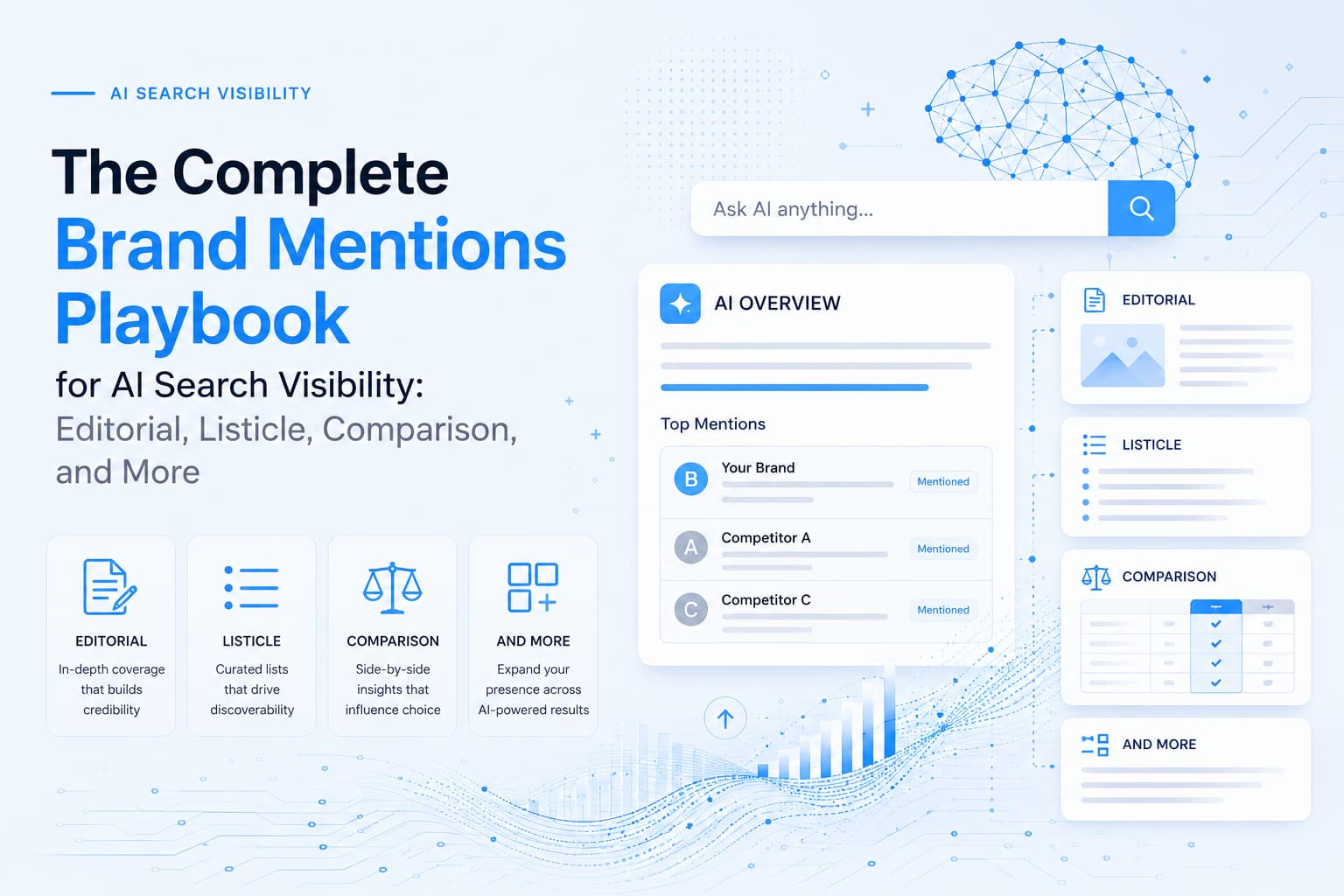
AI Overview citations: Consistent editorial mentions across trusted publications establish entity recognition and topical authority. Users getting AI-generated answers see your brand cited as a credible source.
LLM corpus presence: Frequent appearances in high-quality editorial content across the web mean your brand gets embedded in the training and retrieval data of AI models. Users asking AI tools for recommendations encounter your brand.
E-E-A-T strength: The combination of authoritative backlinks and credible editorial mentions creates a robust multi-signal E-E-A-T profile that is resilient to algorithm changes.
Why the Combination Is Stronger Than the Sum of Its Parts
There is a specific synergy between links and mentions that makes the combined strategy more powerful than running them in parallel.
When a publication mentions your brand AND links to your site, you get both signals simultaneously from a single piece of coverage. The link passes authority. The mention builds entity recognition. The editorial context strengthens E-E-A-T. One campaign creates three distinct types of value.
This is why earned editorial coverage is the most efficient strategy for building both signals at once. A single well-placed story in a credible publication delivers more combined visibility value than ten lower-quality links built through traditional outreach.
8. Earned Editorial Coverage: The Most Efficient Way to Build Both
Earned editorial coverage is the process of generating original stories that get published and distributed across real newsrooms and authoritative publications. It is the single most efficient strategy for building both backlinks and brand mentions simultaneously, from sources that carry maximum credibility with both Google and AI systems.
It is worth being precise about what earned editorial coverage means, because it is frequently confused with two things it is not.
It is not a press release. A press release is a self-authored document distributed through a wire service. It may generate pickups, but those pickups often consist of duplicated content from low-authority syndication sites. The links are typically nofollow. The mentions carry limited editorial credibility because the content originated with the brand itself.
It is not a paid placement. Sponsored content or native advertising can appear on high-authority publications, but Google’s systems are increasingly sophisticated at identifying commercial relationships. Paid placements do not carry the same credibility signals as genuine editorial coverage.
Earned editorial coverage is content that a publication chooses to run because it is genuinely newsworthy, insightful, or valuable to its readers. It might take the form of:
- An original data story based on proprietary research your brand commissioned
- An expert commentary piece where your spokesperson is quoted alongside other industry voices
- A trend analysis that positions your brand’s perspective within a larger industry narrative
- A case study or success story that a trade publication finds compelling enough to cover independently
When this type of content appears in real newsrooms and is organically picked up by other publications, it generates the highest-quality combination of links and mentions available in modern SEO.
Why Real Newsrooms Matter
The distinction between real newsrooms and content farms or low-authority blogs is significant for both Google and AI systems.
Real newsrooms have established editorial standards, domain authority built over years or decades, and a readership that includes journalists, researchers, and industry professionals. Content published in real newsrooms is more likely to be crawled, indexed, weighted heavily by Google’s quality signals, and included in the training and retrieval data of AI systems.
When you earn coverage in a publication that a potential customer actually reads and trusts, the credibility transfer is real. When your brand is mentioned alongside genuinely useful journalism, the editorial association strengthens your brand’s perceived authority in ways that no amount of link-building alone can replicate.
9. What Earned Editorial Coverage Actually Looks Like in Practice
Effective earned editorial coverage starts with a story that a real publication would want to tell. It is built around original angles, credible spokespeople, and genuine news value. It results in links and mentions from trusted publishers that strengthen both your domain authority and your brand’s entity recognition.
Here is a practical breakdown of what this looks like at each stage.
The Story
The foundation of earned coverage is a story worth telling. This typically means one of the following:
Original data: Commission a survey, analyze proprietary platform data, or publish industry research that no one else has. Data-driven stories are consistently among the most widely covered content types because they give journalists something new to report.
Expert perspective on a trend: If something significant is happening in your industry, your brand’s leadership can offer commentary that frames the trend in a way that serves a publication’s readers. This requires genuine expertise and a timely angle.
A remarkable outcome or case study: If your brand has achieved something genuinely noteworthy — a significant client result, a product innovation, an unconventional approach that worked — that story has natural news value.
A contrarian or unexpected angle: Stories that challenge conventional wisdom or reveal something counterintuitive tend to earn organic pickup from other publications.
The Distribution
Once the story exists, distribution determines how widely it spreads. Effective earned editorial distribution involves:
- Targeted outreach to journalists and editors at publications your target audience reads
- Pitching the story with a clear, compelling news hook that serves the publication’s editorial interests
- Providing all supporting materials (data, quotes, imagery, expert access) that make it easy for a journalist to cover the story
- Timing the pitch to align with relevant news cycles, industry events, or seasonal interest patterns
The Pickup
When a story gains traction, it begins to generate organic pickup. Other publications cite the original story. Journalists reference the data in their own pieces. Industry newsletters summarize the findings. Social media amplifies the narrative.
Each pickup generates a new mention. Many generate a link. The original story becomes a node in a growing network of editorial references to your brand, all of which contribute to your entity signals and domain authority simultaneously.
The Compounding Value Over Time
A well-executed earned coverage campaign does not generate value only at the moment of publication. Because the underlying story lives permanently on authoritative domains, it continues to be discovered, cited, and referenced long after the initial campaign. The links age and accumulate authority. The mentions continue to reinforce your entity signals. The story becomes part of the permanent editorial record of your industry.
10. How to Build Your Brand Mention Strategy From Scratch
Building a brand mention strategy requires four steps: audit your current mention landscape, identify your target publication set, build a systematic outreach and content approach, and measure mention velocity alongside traditional link metrics. This framework can be implemented by any brand regardless of size or existing authority.
Step 1: Audit Your Current Mention Landscape
Before building a mention strategy, you need to understand where you currently stand. This means answering several questions:
- How often is your brand mentioned across the web right now?
- Which publications mention you, and what is their authority level?
- What topics are your brand mentions associated with?
- Are your competitors mentioned more frequently in your target publications?
- Are you currently appearing in AI-generated answers for your target queries?
Tools that help with this audit include Google Alerts (basic), Mention, Brand24, Ahrefs Content Explorer, and Semrush’s Brand Monitoring feature. For AI Overview presence specifically, manually testing your target queries in Google and noting which brands appear in generated answers gives you a clear benchmark.
Step 2: Identify Your Target Publication Set
Not all publications are equally valuable for your mention strategy. Your target publication set should be defined by three criteria:
Audience alignment: The publication’s readers should overlap significantly with your target customer profile. A mention in a publication your potential customers actually read carries both credibility and referral value.
Editorial authority: The publication should have genuine editorial standards and an established reputation. Domain authority is a useful proxy, but editorial reputation and audience trust are the real determinants of mention quality.
Topic relevance: The publication should regularly cover topics adjacent to your brand’s area of expertise. A technology brand should prioritize mentions in technology publications; a consumer brand should prioritize consumer media.
Build a tiered list: Tier 1 publications (highest authority, most ambitious to place in), Tier 2 publications (strong authority, realistic targets for consistent coverage), and Tier 3 publications (niche but relevant, easier to access and still valuable for topical co-occurrence signals).
Step 3: Build a Systematic Content and Outreach Approach
A mention strategy is not a one-time campaign. It is a systematic, ongoing process. The key elements are:
A rolling content calendar for earned coverage: Plan original stories, data releases, and expert commentary pieces on a regular cadence. Aim for at least one genuinely newsworthy story per quarter that you actively pitch to Tier 1 and Tier 2 publications.
Reactive media monitoring: Set up alerts for breaking news in your industry so you can offer rapid expert commentary. Journalists frequently quote sources who reach out quickly with a relevant perspective when a story breaks.
Relationship building with key journalists: Identify the three to five journalists who most regularly cover your topic area in your priority publications. Build genuine relationships over time by providing value before you need coverage — sharing useful data, offering background commentary, flagging stories they might have missed.
Thought leadership content: Publish original analysis, opinion, and research on your own site and in guest contributor slots at target publications. This creates owned content that earns organic mentions when other writers reference your perspective.
Step 4: Measure Mention Velocity Alongside Link Metrics
Your mention strategy needs its own measurement framework, separate from your link metrics. Key metrics to track include:
| Metric | What It Measures | How to Track |
|---|---|---|
| Mention volume | Total brand mentions per month | Brand24, Mention, Ahrefs |
| Mention authority | Average DA of mentioning domains | Ahrefs, Semrush |
| Topical association | Which topics your brand is co-mentioned with | Manual analysis, NLP tools |
| AI Overview presence | Whether your brand appears in AI-generated answers | Manual query testing |
| Mention sentiment | Whether coverage is positive, neutral, or negative | Brand monitoring tools |
| Mention velocity | Rate of change in mention volume over time | Month-over-month tracking |
Set baseline measurements before you begin your mention strategy, and track changes monthly. AI Overview presence in particular should be tested quarterly against a consistent set of 20 to 30 target queries.
11. Metrics That Matter: How to Track Mention Authority
Measuring brand-mention authority requires tracking mention volume, source quality, topical co-occurrence, and AI-citation presence. These metrics together give you a complete picture of your brand’s editorial credibility and its visibility in AI-driven search environments.
Here is a deeper breakdown of each metric and why it matters.
Mention Volume and Velocity
Raw mention volume indicates how frequently your brand is discussed. But velocity — the rate at which the mentioned volume is changing — is more strategically valuable. A brand going from 20 mentions per month to 80 over six months is building momentum that will compound into significantly stronger entity signals over time.
Track mention volume monthly. Note spikes and identify what drove them. Replicate the conditions that produce volume increases.
Source Authority Distribution
Not all mentions carry equal weight. A single mention in the Wall Street Journal contributes more to your entity signals than fifty mentions in low-authority blogs. Track the distribution of your mentions by source authority using a tiered framework:
- Tier 1 mentions: Major national or international publications (DA 80+)
- Tier 2 mentions: Strong industry or vertical publications (DA 50-79)
- Tier 3 mentions: Niche or emerging publications (DA 30-49)
- Tier 4 mentions: Low-authority or user-generated content (DA below 30)
Your goal is to increase Tier 1 and Tier 2 mentions over time while maintaining Tier 3 coverage for topical depth.
Topical Co-occurrence Analysis
Which topics and entities is your brand most frequently mentioned alongside? This analysis reveals how Google’s systems are likely categorizing your brand. If your brand is consistently mentioned alongside competitors in your space and industry-specific terminology, your entity signals are becoming well-defined. If mentions are scattered across unrelated topics, your entity definition may be diluted.
Regularly analyze a sample of your recent mentions for the topics, keywords, and competitor names they contain. This tells you whether your mention strategy is strengthening the right associations.
AI Overview: Presence Tracking
This is the metric that most directly reflects whether your mention strategy is working for AI-driven visibility. Compile a list of 20 to 30 queries that represent the questions your target customers are likely asking Google. Test each query manually and record which brands appear in AI-generated answers. Track this monthly or quarterly.
As you mention, strategy builds momentum; you should see your brand begin to appear in AI Overview results for queries where it was previously absent.
Share of Voice in Editorial Coverage
Compare your mention volume and authority against your top three to five competitors. Share of voice — the percentage of total industry mentions captured by your brand — tells you whether you are gaining or losing ground in the editorial conversation about your space.
A brand with 15% share of voice in its industry’s editorial coverage has a meaningfully different AI visibility profile than a brand with 5% share of voice, even if their backlink profiles are similar.
12. Common Mistakes Brands Make With Mention Strategy
The most common mistakes in brand mention strategy are prioritizing mention volume over source quality, treating mentions as a PR vanity metric, failing to connect editorial coverage to search goals, and neglecting the consistency required to build durable entity signals.
Here is a closer look at each mistake and how to avoid it.
Mistake 1: Chasing Volume Over Quality
It is tempting to measure success by the total number of mentions. But fifty mentions on low-authority sites contribute far less to your entity signals than five mentions in high-authority editorial publications. A mention strategy focused on volume at the expense of quality will generate impressive-looking reports without producing meaningful changes in AI visibility or search presence.
The fix: Set quality thresholds for your mention tracking. Weight your reporting toward Tier 1 and Tier 2 mentions. Evaluate campaigns by the authority of the coverage generated, not just the volume.
Mistake 2: Treating Mentions as a PR Vanity Metric
Many brands track mentions as a measure of brand awareness without connecting them to search and AI visibility goals. This means mention strategy lives in the PR team, link-building lives in the SEO team, and no one is optimizing for the intersection.
The fix: Create cross-functional alignment between PR, content, and SEO teams around a shared visibility framework. Define shared metrics that connect editorial coverage to search performance outcomes.
Mistake 3: Ignoring Niche and Vertical Publications
Brands often focus their earned coverage efforts exclusively on major national publications, ignoring the niche trade publications, industry blogs, and vertical media where their actual customers spend time. Niche publications often have highly engaged, relevant audiences and contribute meaningfully to topical co-occurrence signals.
The fix: Include Tier 3 publications in your target publication set. Niche mentions from highly relevant sources strengthen your topical authority signals in ways that broader coverage sometimes does not.
Mistake 4: Inconsistency
A single strong coverage moment followed by six months of silence does not build durable mention authority. Google’s entity signals are influenced by recency and velocity. A brand that generates consistent editorial coverage over time builds progressively stronger signals than one that runs occasional campaigns with long gaps between them.
The fix: Build mention generation into your ongoing marketing operations, not just campaign cycles. Even a modest cadence of one to two meaningful placements per month compounds significantly over twelve to eighteen months.
Mistake 5: Not Auditing Competitor Mention Profiles
Many brands build their mention strategy in isolation, without understanding how their mention profile compares to competitors. If your competitors are consistently mentioned in ten publications you have never appeared in, you have a clear roadmap for where to focus your efforts.
The fix: Audit competitor mention profiles quarterly. Identify the publications mentioning your competitors that have not yet mentioned your brand. Build targeted outreach strategies for those specific publications.
Mistake 6: Failing to Optimize Your Own Content for Entity Clarity
Your mention strategy works best when your own content clearly defines your brand’s entity — what you do, who you serve, and what topics you are associated with. If your own site is unclear or inconsistent in its brand identity, external mentions will reflect that confusion.
The fix: Ensure your own content consistently uses the brand name, topic associations, and category language that you want Google’s entity recognition systems to associate with your brand. Structured data, a well-optimized About page, and consistent topical focus across your blog all contribute to entity clarity.
13. Frequently Asked Questions About Brand Mention Strategy and SEO Visibility
People Also Ask: Brand Mentions, Backlinks, and AI Search Visibility
Common Questions About Link Strategy and Brand Mention SEO
What is the difference between a backlink and a brand mention in SEO?
A backlink transfers domain authority from one website to yours, directly influencing search rankings. A brand mention is an unlinked reference to your brand across editorial content, which signals credibility to Google’s entity recognition systems and AI Overviews. Both are trust signals, but they work through entirely different mechanisms in modern search.
Do unlinked brand mentions actually help SEO and search rankings?
Yes, unlinked brand mentions improve SEO by strengthening your brand’s entity recognition in Google’s Knowledge Graph. Google’s natural language processing reads co-occurrence patterns across authoritative publications, associating your brand with relevant topics. This directly influences AI Overview citations and generative search responses, even when no clickable link is present in the mention.
How do brand mentions influence Google’s AI Overviews?
Brand mentions influence AI Overviews by establishing your brand as a recognized, credible entity associated with specific topics. Google’s AI systems analyze editorial co-occurrence patterns across trusted publications to decide which brands deserve citation in generated answers. Consistent mentions across high-authority sources significantly increase the likelihood that your brand will appear in AI Overview results.
What is earned editorial coverage, and why does it matter for SEO?
Earned editorial coverage is organic media placement in real newsrooms based on genuine news value, not paid promotion. It matters for SEO because a single placement simultaneously generates a backlink that builds domain authority and a brand mention that strengthens entity recognition. It is the most efficient way to build both critical trust signals from one campaign.
How does brand mention strategy support Google’s E-E-A-T framework?
Brand mention strategy directly strengthens E-E-A-T by providing third-party editorial validation of your brand’s Experience, Expertise, Authority, and Trust. When independent, credible publications consistently reference your brand in relevant contexts, Google interprets that convergent endorsement as evidence of genuine authority — a signal that self-published content alone cannot replicate, regardless of how well-optimized it is.
How can I track whether my brand mentions are improving AI search visibility?
Track AI search visibility by manually testing 20 to 30 target queries in Google and recording which brands appear in AI Overview results. Monitor monthly mention volume, source authority, and topical co-occurrence using tools such as Brand24, Ahrefs, or Semrush. Increasing Tier 1 and Tier 2 editorial mentions consistently over time is the clearest predictor of improved AI citation presence.
What is the biggest mistake brands make with their brand mention strategy?
The biggest mistake is treating brand mentions as a PR vanity metric rather than a signal of search visibility. Brands often chase mention volume on low-authority sites instead of prioritizing placements in high-authority editorial publications. Without connecting the mention strategy to SEO and AI visibility goals, the effort generates impressive reports but produces no meaningful improvement in search presence or AI Overview inclusion.
Conclusion: The Strongest Visibility Profiles Have Both
The brands winning search visibility in 2025 and beyond are not choosing between link authority and brand mention presence. They are building both systematically and simultaneously, using earned editorial coverage as the most efficient mechanism to create both signals at scale.
Here is the core insight to take away from everything covered in this article:
A backlink tells Google’s ranking algorithm that your domain deserves to rank. A brand mention tells Google’s AI systems that your brand deserves to be cited. You need both signals to win in both environments.
The traditional search results page is still valuable. Organic rankings still drive significant traffic. But the AI Overview layer above those results is capturing an ever-larger share of user attention, and it operates on a different set of signals than traditional SEO has been optimized for.
The brands that recognize this shift early and build mention strategies alongside their link strategies will accumulate a compounding advantage that becomes harder for competitors to close over time. Entity recognition, topical co-occurrence, and editorial credibility are not built overnight. They are built through consistent, quality-focused mention generation over months and years.
The good news is that the mechanism for building both signals is the same: earned editorial coverage from real newsrooms and trusted publications. One well-placed story in the right publication delivers a link that builds domain authority and a mention that simultaneously strengthens entity recognition.
Your action steps:
- Audit your current mention landscape and benchmark your AI Overview presence across 20 to 30 target queries
- Identify the gap between your mention profile and your top competitors
- Define your target publication set across three tiers
- Build a rolling content calendar focused on genuinely newsworthy stories worth pitching
- Create a cross-functional measurement framework that tracks mention authority alongside traditional link metrics
- Commit to a consistent cadence of earned coverage activity over the next 12 months
Brands that treat mentions as an afterthought will keep wondering why they remain invisible in AI-generated answers despite strong rankings. The brands that build both signals will show up everywhere their customers are looking.
Want Your Brand in Google’s AI Overviews?
Megrisoft specializes in earned editorial coverage and brand mention strategies that get you visible where it counts. Stop leaving the second trust signal on the table. Talk to us today, and let’s build your mention strategy.
About Megrisoft
Company: Megrisoft
Industry: Digital Marketing and SEO Services
Specialization: Brand Mention Strategy, Earned Editorial Coverage, Link Building, and AI Search Visibility
Founded: 1992
Headquarters: India and the UK
Website: www.megrisoft.com
Megrisoft is a full-service digital marketing agency helping brands build authoritative search visibility through earned editorial coverage, strategic link building, and brand mention strategies that drive presence in both traditional search and AI-generated answers.

Leave a Comment