

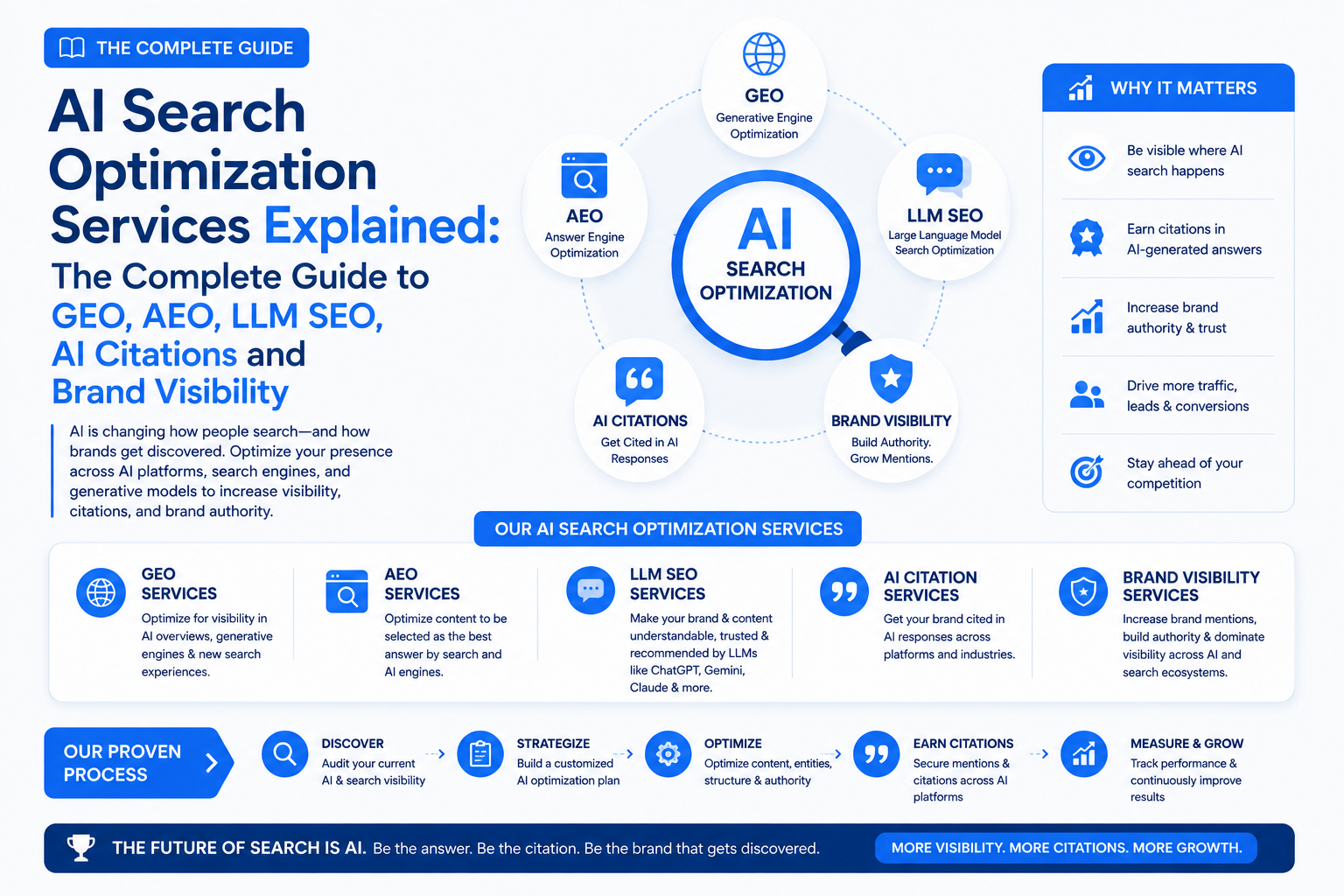
AI search optimization services help organizations improve how they are discovered, understood, cited, mentioned and recommended in AI-generated answers. The work spans Google AI Overviews and AI Mode, ChatGPT, Microsoft Copilot, Bing, Perplexity, Gemini, Claude, Grok, voice assistants and other answer engines.
This is not one tactic, and it is not a replacement for search engine optimization. It combines familiar disciplines such as technical SEO, content strategy, structured data, digital PR and reputation management with newer work such as prompt research, AI citation monitoring and generative search visibility tracking.
The terminology is still settling. Agencies may use GEO, AEO, LLM SEO and AI visibility optimization loosely or interchangeably, even though they describe different priorities. The useful question is not which acronym sounds newest. It is which combination of research, technical access, content, authority and measurement solves the business problem.
Key takeaways
- AI search optimization is the broad discipline. GEO, AEO, LLM optimization, entity optimization and citation building sit within or alongside it.
- Traditional SEO remains the foundation. Crawlable, indexable, useful and trustworthy pages are more likely to be available to search-grounded AI systems.
- Citations, mentions and recommendations are different outcomes. A brand may be named without a link, cited without being recommended, or recommended based partly on third-party evidence.
- Visibility is prompt-dependent. Results can change by wording, platform, model, location, user context, and date.
- Most businesses do not need 28 separate campaigns. A sensible program groups related services around a measured baseline and a few commercial goals.
- No provider can guarantee AI citations or rankings. The systems are dynamic, and their full retrieval and selection mechanisms are not public.
AI search optimization services at a glance
The maturity labels below describe how the services are commonly bought and delivered. “Emerging” does not mean unimportant. It means methods, terminology, and measurement are still developing.
| Service | Primary purpose | Typical category | Maturity | Best suited for |
|---|---|---|---|---|
| AI Search Visibility Audit | Establish current visibility and barriers | Research | Emerging | Any organization starting out |
| AI Competitor Visibility Analysis | Compare mentions, citations, and recommendations | Research | Emerging | Competitive categories |
| AI Search Keyword and Prompt Research | Map real questions and prompt patterns | Research | Emerging | Content-led and SaaS brands |
| AI Content Gap Analysis | Find missing topics, evidence, and formats | Research | Established component | Sites with existing content |
| AI Search Strategy and Consulting | Set priorities, governance, and roadmap | Strategy | Emerging | Larger or complex organizations |
| Generative Engine Optimization | Improve visibility in generated responses | Core optimization | Emerging | Brands seeking cross-platform reach |
| Answer Engine Optimization | Become a clear source for direct answers | Core optimization | Established and evolving | Publishers, services and support-led sites |
| LLM SEO or LLM Optimization | Improve machine understanding and representation | Core optimization | Emerging | Brands with weak or inaccurate representation |
| AI Search Visibility Optimization | Coordinate visibility work across platforms | Core optimization | Emerging umbrella service | Businesses wanting an integrated campaign |
| Entity and Knowledge Graph Optimization | Clarify identity, attributes and relationships | Core optimization | Established foundation | Local, corporate and expert brands |
| AI Content Optimization | Make content useful, extractable and evidence-rich | On-site | Emerging component | Content-heavy websites |
| Structured Data and Schema Implementation | Provide machine-readable context | Technical | Established | Ecommerce, local, publishing and SaaS sites |
| AI Crawler Accessibility Optimization | Remove access and rendering barriers | Technical | Emerging component | Sites with complex infrastructure |
| Expert Authority and Thought Leadership | Build credible first-hand expertise | Content and authority | Established | B2B, YMYL and specialist brands |
| Review and Reputation Signal Building | Strengthen trustworthy third-party evidence | Reputation | Established | Local, ecommerce and software brands |
| AI Citation Building | Increase source-reference potential | Authority | Emerging | Publishers, research and expert sites |
| AI Brand Mention Outreach | Increase relevant third-party brand references | Authority | Emerging | Brands with low recognition |
| Listicle Outreach | Earn inclusion in comparison and recommendation pages | Authority | Established specialty | SaaS, products and agencies |
| Community Mention Building | Build authentic visibility in discussions | Authority | Specialized | Categories shaped by peer recommendations |
| Digital PR for AI Visibility | Earn authoritative coverage and evidence | Authority | Established, newly applied | Brands with news, data or expertise |
| Multimodal Search Optimization | Improve discovery through images, video, and audio | Specialized | Specialized | Visual, product and instructional brands |
| Ecommerce Product Feed Optimization | Improve product data quality and coverage | Specialized | Established | Retailers and marketplaces |
| International AI Search Optimization | Adapt visibility work by market and language | Specialized | Specialized | Multinational organizations |
| AI Reputation Management | Correct and counter harmful AI narratives | Specialized | Emerging | Brands facing inaccurate descriptions |
| AI Search Performance Tracking | Measure prompt-level visibility over time | Measurement | Emerging | Ongoing campaigns |
| AI Citation and Mention Monitoring | Track sources, links and unlinked references | Measurement | Emerging | PR, content and brand teams |
| AI Reputation Monitoring | Track sentiment and factual accuracy | Measurement | Emerging | Regulated and reputation-sensitive brands |
| AI Search Reporting and Strategic Analysis | Turn observations into decisions | Measurement | Emerging | Executives, agencies and mature programs |
What are AI search optimization services?
AI search optimization services are professional activities intended to improve a brand’s presence in search experiences that generate, summarize or synthesize answers. They can affect whether a company is found as a source, named as an entity, included in a comparison, recommended for a use case, or described accurately.
Different platforms build answers differently. Google states that AI Overviews and AI Mode are rooted in its core Search systems and that pages must be indexed and eligible to appear with a snippet to qualify as supporting links. It also says there are no special technical requirements beyond established Search practices. ChatGPT Search may rewrite a user’s question into one or more web searches and can present citations and a sources panel. OpenAI says inclusion requires allowing OAI-SearchBot and does not guarantee top placement. Perplexity and Claude also offer web-grounded answers with citations, while Copilot Search in Bing combines generated summaries with prominently cited web sources.
These differences matter. Improving Google eligibility is not the same as influencing how an LLM represents an established brand from learned or retrieved information. A single audit should therefore record platform, interface, location, account state, prompt, date and whether the answer used live web search.
Why AI search visibility matters
Search behavior increasingly includes conversational questions, comparison prompts, follow-up questions and generated summaries. A prospect may ask for the best payroll platform for a 50-person UK company rather than search for “payroll software.” The response can compress research, shortlist creation and preliminary evaluation into one interaction.
This creates several types of visibility:
- Discovery: the brand appears when the user did not name it.
- Citation: a page is referenced as evidence or further reading.
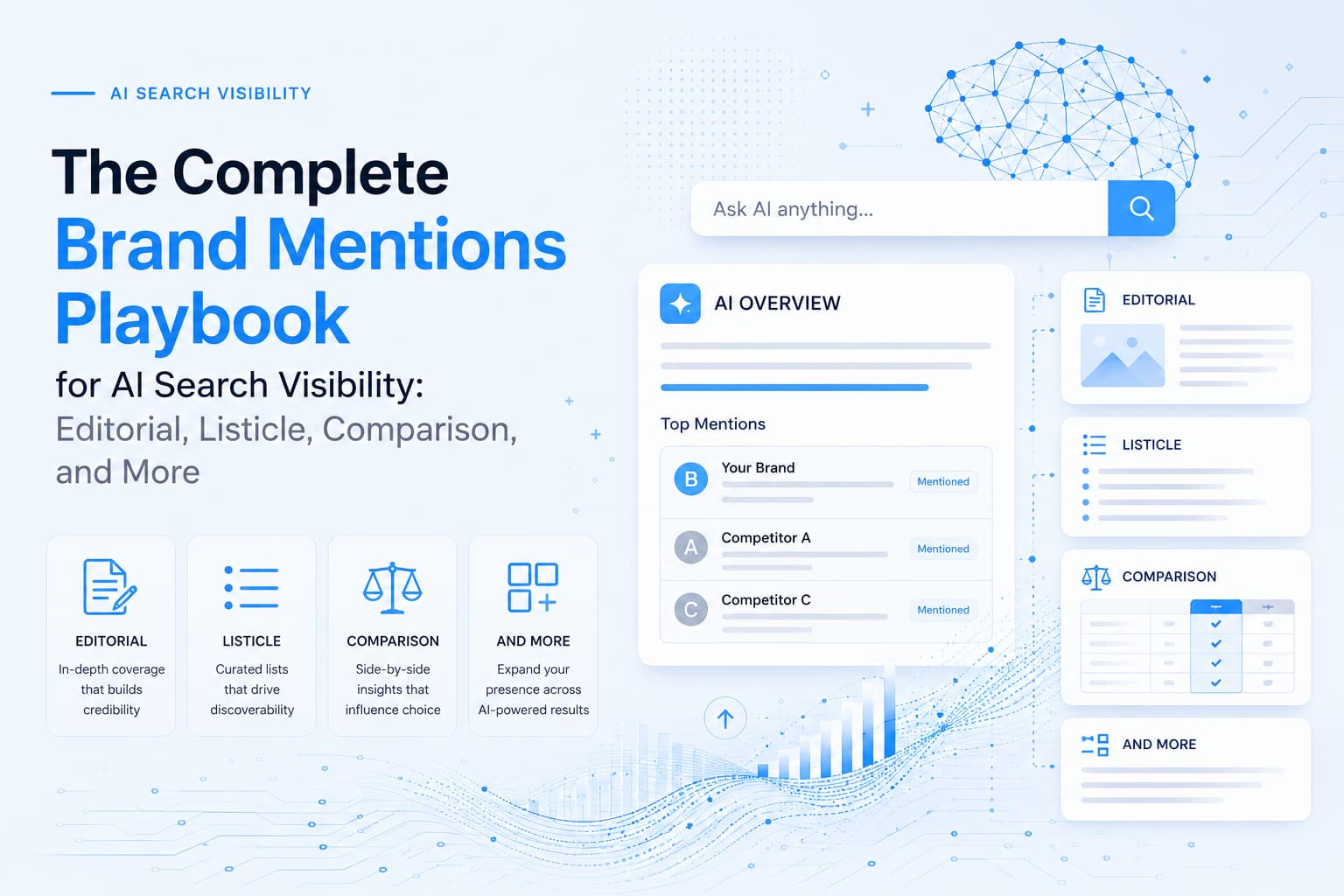
- Mention: the brand is named without a direct source link.
- Recommendation: the system includes the brand in a shortlist or suggests it for a stated need.
- Representation: the answer describes the company, product, expert or policy accurately.
- Referral: the user follows a source link or otherwise visits the business.
These outcomes have different commercial value. A citation to original research may build authority. A recommendation can influence demand even when it produces no measurable click. An inaccurate description can harm trust, even with strong organic rankings. Measurement should reflect that range instead of treating every appearance as equivalent.
How AI search optimization differs from traditional SEO
Traditional SEO generally concentrates on crawlability, indexing, rankings, search-result presentation, and organic traffic. AI search optimization retains that foundation but examines a wider answer environment.
First, the unit of research is often a complete prompt or task, not just a keyword. “Best CRM” and “Which CRM suits a five-person consultancy that needs UK data hosting?” may produce very different sources and recommendations.
Second, the useful outcome may occur without a click. A brand mention can influence recall while remaining invisible in analytics. That makes controlled prompt tracking, citation records and share-of-voice measures more important.
Third, third-party sources can play a larger strategic role. Recommendation pages, reviews, forums, media coverage, databases and expert profiles may help systems corroborate claims or assemble a shortlist. A company cannot manage those sources as if they were pages on its own domain.
Finally, generated answers vary. Rankings also fluctuate, but AI output can change between repeated runs because of model behavior, query reformulation, personalization, live retrieval and interface updates. Reporting needs samples and trends, not a triumphant screenshot.
Research, auditing and strategy services
1. AI Search Visibility Audit
An AI Search Visibility Audit establishes where, how and how often a brand appears across a defined set of platforms and prompts. It solves the basic problem of making decisions without a baseline.
The audit normally tests branded, category, problem, comparison and recommendation prompts. It records mentions, citations, position within an answer, sentiment, factual accuracy, linked sources and competitor presence. A technical review may also check indexability, robots directives, crawler access, content rendering, entity consistency and schema.
Typical deliverables include a prompt set, platform-by-platform findings, citation-source analysis, technical issues, content gaps, competitor comparison and prioritized actions. It is best for any business beginning AI visibility work or challenging an assumption based on anecdotal searches.
Its main KPIs are baseline mention rate, citation rate, recommendation rate, factual accuracy, and AI share of voice. This is an emerging standalone service and usually the most sensible starting point.
2. AI Competitor Visibility Analysis
This analysis explains why competitors appear where the client does not. It compares not only output frequency but also the evidence surrounding each competitor.
Work may map the domains that cite or recommend competitors, listicles in which they appear, review coverage, entity completeness, topical content, expert contributions and prompt clusters they dominate. The point is not to copy every competitor tactic. It is to identify patterns such as a rival’s repeated inclusion in authoritative comparison pages or stronger coverage of a specific use case.
Deliverables often include an AI share-of-voice comparison, source overlap, competitor citation graph, content opportunities and attainable authority targets. It suits SaaS, ecommerce and professional-service markets where several known brands compete for the same shortlist.
Unlike a general visibility audit, this service centers the comparative landscape. Useful KPIs include prompt wins and losses, competitor co-mentions and source-gap closure. It is an emerging research service, often bundled into an audit.
3. AI Search Keyword and Prompt Research
Prompt research maps the questions, constraints, and follow-ups people may use in conversational search. It extends keyword research rather than replacing it.
Researchers combine conventional search data, customer interviews, sales and support questions, community discussions, internal site search, and observed AI follow-ups. Prompts should cover the journey from learning and troubleshooting to comparing and purchasing. They should also include attributes that change the answer, such as location, company size, budget, integrations, or regulatory needs.
A useful deliverable groups prompts by intent, audience, stage, platform and business value. It also marks prompts suitable for tracking and those better used for content planning. A SaaS team, for example, may map “alternatives to,” migration, integration, security and role-specific prompts rather than chase a single high-volume term.
KPIs include validated prompt coverage and downstream visibility across the tracked set. This is an emerging standalone service and a core component of audits and content strategy.
4. AI Content Gap Analysis
AI Content Gap Analysis finds information the website lacks or presents poorly for answer-oriented discovery. The missing element may be a topic, a direct answer, original evidence, product detail, a comparison, a visual asset, or a clear statement of who the offer is for.
The analysis compares existing pages with prompt needs, competitor sources, and cited documents. It may reveal that a product site explains features but never publishes implementation details, limitations, pricing context or comparisons that answer engines need for nuanced recommendations.
Deliverables include a topic matrix, page-to-prompt mapping, refresh priorities, consolidation opportunities and briefs for new assets. Success is measured through gap closure, content coverage, organic performance and subsequent mentions or citations.
Content gap analysis is an established SEO activity adapted for AI search. It differs from content optimization because it decides what should exist; optimization improves an existing or planned asset.
5. AI Search Strategy and Consulting
Strategy turns findings into a coordinated plan. It defines target audiences, platforms, outcomes, governance, resources, and measurement rather than selling isolated tactics.
Consulting may include opportunity sizing, workflow design, editorial standards, technical priorities, outreach policy, reputation escalation, tool selection, and integration with SEO, PR, product marketing, and analytics. For a large company, it can also clarify who owns prompt tracking, factual corrections and approval of AI-facing content.
The output should be a prioritized roadmap with responsibilities, dependencies, and review points. Assess progress against business-relevant visibility goals and completion of high-impact actions, not the number of new acronyms adopted.
This is an emerging standalone offering best suited to organizations with multiple markets, sites or teams.
Core AI search optimization services
6. Generative Engine Optimization (GEO)
Generative Engine Optimization improves the likelihood that content and entities will surface within generative search results and AI-produced responses. GEO looks across technical access, content usefulness, sourceworthiness, entity clarity and off-site authority.
A GEO campaign may include prompt research, content restructuring, evidence development, schema, internal linking, digital PR, citation outreach and measurement. For Google, the technical foundation still follows core Search requirements; Google explicitly says its established SEO guidance applies to AI Overviews and AI Mode. Other platforms may retrieve from the web, licensed sources, partner search indexes or model knowledge in different ways.
GEO is broader than AEO. AEO aims at a direct answer to a question, while GEO also covers synthesized explanations, comparisons, and recommendations. Metrics include generated-answer visibility, citation frequency, recommendation share, and qualified referral traffic.
GEO is an emerging umbrella service. It justifies a separate campaign when generative visibility is a defined channel with cross-functional work and ongoing tracking.
7. Answer Engine Optimization (AEO)
Answer Engine Optimization helps a source provide the clearest, most useful response to a specific question. It grew from work on featured snippets, voice results, knowledge panels, and question-led content and now also applies to AI answers.
AEO uses concise definitions, descriptive headings, logically ordered explanations, relevant FAQs, clear tables and content that resolves the query without burying the answer. Technical work may include appropriate structured data, indexability and strong internal links. The content still needs depth and credibility; formatting alone cannot make a weak answer authoritative.
AEO suits publishers, service companies, support centers and businesses whose customers ask repeatable questions. Measures include answer-feature visibility, citations for question prompts, engagement and assisted conversions.
It is an established discipline that is evolving. Unlike GEO, it concentrates on answer selection and extraction for defined questions rather than every type of generative visibility.
8. LLM SEO or LLM Optimization
LLM optimization focuses on how a brand, entity and its information are understood, retrieved, mentioned and represented by large language model systems. It addresses problems such as omission, category confusion, outdated descriptions and inconsistent associations.
The work can include entity reconciliation, clear brand facts, authoritative profiles, consistent third-party references, quotable expert content, retrieval-friendly pages and testing across prompts that do and do not invoke live search. It must distinguish between a model’s learned knowledge and information retrieved at answer time; marketers rarely control training data directly.
LLM optimization is useful for companies with a weak digital footprint, a name shared with another entity or a complex product category. KPIs include correct entity identification, message accuracy, relevant mentions, and association with target topics.
It is an emerging umbrella term. It overlaps with GEO but focuses more on representation across LLM-based systems, including situations where a visible citation is absent.
9. AI Search Visibility Optimization
AI Search Visibility Optimization is a practical campaign label for improving mentions, citations, recommendations, and accurate representation across selected AI search experiences. It is often the best commercial umbrella when a client needs outcomes rather than a narrow methodology.
Activities can span audit work, technical fixes, content, entity optimization, digital PR, listicle outreach and tracking. The scope should name the platforms and outcomes; “AI visibility” alone is too vague to be a deliverable.
This service suits businesses that want one coordinated program across Google, ChatGPT, Perplexity, Copilot and other relevant interfaces. Metrics may include weighted AI share of voice, citation coverage, brand recommendation tracking, source diversity and conversions where referral data is available.
It is an emerging integrated service. It differs from GEO mainly in framing: GEO emphasizes generative engines, while AI visibility optimization can include voice answers, entity panels and broader LLM representation.
10. Entity and Knowledge Graph Optimization
Entity optimization helps machines understand exactly who or what a brand, person, place or product is and how it relates to other entities. A knowledge graph represents those entities and relationships in structured form.
Work includes reconciling names, addresses, identifiers, founder or parent relationships, profiles, sameAs references, organization information, local listings, and authoritative corroboration. Schema can express facts on the site, while external sources help verify them. The aim is consistency and clarity, not manufacturing a knowledge panel.
It is especially valuable for local companies, experts, multi-brand groups, renamed businesses and organizations with conflicting web records. KPIs include entity consistency, correct attribution, branded-result accuracy, and reduction in ambiguous or outdated AI descriptions.
Entity SEO is an established foundation applied to newer answer systems. It differs from LLM optimization by concentrating on identity and relationships rather than the full range of content retrieval and brand representation.
Website and content optimization services
11. AI Content Optimization
AI Content Optimization improves a page’s usefulness for both people and systems that retrieve or summarize information. It does not mean adding AI-written paragraphs or repeating target phrases.
Editors clarify the main answer, improve factual density, add first-hand expertise, support claims, define terminology, cover meaningful follow-ups and use formats suited to the subject. They may turn a vague product page into a precise account of use cases, limitations, integrations, security and pricing logic. Important information should be present in accessible page content, not hidden only inside images or interactions.
Deliverables include revised pages, content briefs, fact-check notes and update schedules. KPIs combine organic engagement, prompt coverage, citations, mentions and conversion behavior.
This is an emerging component built on established content optimization. It differs from AEO because it improves entire information assets, not only short direct answers.
12. Structured Data and Schema Implementation
Structured data is machine-readable markup that labels the meaning of page content. Schema implementation can clarify organizations, people, products, articles, local businesses, events, and other supported types.
The service covers schema selection, JSON-LD implementation, validation, error correction, and alignment between markup and visible content. Google says structured data helps it understand page content and can enable rich-result eligibility, but appearance is not guaranteed. The same caution applies to AI visibility: schema aids machine understanding but does not guarantee a citation.
Ecommerce, local, publishing, event and SaaS sites often benefit most. KPIs include valid coverage, error reduction, rich-result eligibility and entity consistency, with AI citations treated as a separate observed outcome.
This is an established technical SEO service and usually a campaign component, not a complete AI SEO program.
13. AI Crawler Accessibility Optimization
Crawler accessibility optimization ensures that intended content can be reached, rendered, and used by relevant search and AI crawlers under the publisher’s chosen policies.
Auditors review robots.txt, meta robots directives, HTTP headers, CDN and firewall rules, server responses, JavaScript rendering, canonicals, sitemaps and bot-specific controls. The goal is not to allow every bot automatically. Organizations should make informed choices about search inclusion, model training and user-initiated retrieval, which may use different controls.
OpenAI, for example, identifies OAI-SearchBot as relevant to ChatGPT Search inclusion. Google states that supporting links in AI Overviews and AI Mode must be indexed and eligible to appear with a snippet. These requirements make access checks necessary, but access alone does not create a ranking advantage.
KPIs include successful fetches, index eligibility, and resolved rendering or blocking errors. This is an emerging technical component, particularly valuable for sites behind strict security systems.
14. Expert Authority and Thought Leadership Development
This service builds credible, attributable expertise around the organization and its people. It solves a common weakness: generic content that makes claims without demonstrating why the source deserves attention.
Activities may include expert interviews, bylined analysis, original research, methodology pages, author profiles, conference contributions, commentary, and consistent subject ownership. Good thought leadership adds experience, data or a defensible perspective. It is not executive ghostwriting that merely restates common advice.
B2B, financial, health, legal, technical and other trust-sensitive sectors gain the most. Deliverables include an editorial platform, research assets, expert pages and earned contributions. Measures include quality citations, relevant media coverage, branded expert searches, assisted pipeline and inclusion in authoritative discussions.
This established authority service supports SEO, PR, and AI visibility simultaneously.
15. Review and Reputation Signal Building
Review and reputation signal building develops a representative body of genuine customer feedback and accurate third-party information. It helps potential customers and answer systems encounter more than the company’s own claims.
The service may improve review-request workflows, response standards, profile completeness, issue escalation and analysis of recurring themes. Reviews must be authentic and comply with each platform’s rules. Buying reviews, suppressing legitimate criticism or using undisclosed incentives creates legal, ethical and reputational risk.
Local businesses, ecommerce stores, marketplaces and software products often need this work. KPIs include review coverage, recency, response rate, sentiment themes and correction of operational issues—not just average rating.
It is an established reputation service. Unlike AI reputation management, it improves the underlying public evidence rather than monitoring and correcting generated descriptions directly.
Authority, citation and mention-building services
16. AI Citation Building
AI Citation Building aims to increase the likelihood that a site or asset is referenced as a source in a generated answer. It combines source-worthy content with discoverability and relevant third-party authority.
Activities may include publishing original data, definitive guides, transparent methodologies, statistics pages, expert explanations, and regularly maintained reference assets. Outreach can introduce those resources to journalists, publishers, and industry curators. Technical access and conventional SEO help make them retrievable.
Publishers, research organizations, specialist firms and data-rich companies are strong candidates. KPIs include citation frequency, citing platforms, cited URLs, prompt coverage, citation persistence and qualified referral traffic.
This is an emerging specialized service. It differs from link building because the target outcome is source attribution inside an AI answer; a citation may or may not behave like a conventional backlink.
17. AI Brand Mention Outreach
Brand mention outreach earns relevant references to a company, product or expert on third-party sites, even when no link is included. The goal is stronger recognition and contextual association.
Campaigns identify publications, directories, resource pages, interviews and industry content where the brand genuinely belongs. The pitch needs a reason: expertise, useful data, a distinctive product fit or a missing factual reference. Mass requests for arbitrary name insertion produce weak signals and poor editorial outcomes.
This service suits brands with strong products but little independent coverage. Measures include qualified new mentions, topical relevance, source authority, sentiment, and subsequent co-mentions in tracked answers.
It is an emerging authority service. Citation building promotes a source that can support an answer; mention building promotes recognition of the entity itself.
18. Listicle Outreach
Listicle outreach seeks inclusion in relevant “best,” “top,” “alternatives,” comparison, and recommendation articles. These pages can influence both human shortlists and the source environment used in answer generation.
The work starts by finding pages that rank, attract the target audience, or appear in citations for important prompts. Outreach then presents evidence for inclusion, such as feature fit, pricing, customer type, integrations, or a trial. Ethical campaigns respect editorial independence and disclose paid arrangements where required.
It is particularly useful for SaaS tools, agencies, consumer products and local services missing from category roundups. KPIs include placements on relevant pages, improved factual descriptions, referral traffic, and presence in recommendation prompts.
This is an established outreach specialty with a newer AI visibility application. It is narrower than general brand mention outreach because it targets shortlist-style content.
19. Community Mention Building
Community mention building develops authentic participation and brand visibility in forums, Q&A platforms, professional groups, and industry communities. It covers categories where buyers trust peer experience and detailed discussion.
The correct method is participation: answer questions, disclose affiliations, share useful experience, and contribute only when relevant. Fabricated accounts, repetitive promotional replies, and planted recommendations can violate platform rules and damage trust.
The service suits software, technical products, hobbies, and considered purchases where communities shape evaluation. Deliverables may include a community map, participation guidelines, an expert-response workflow, and an issue log. KPIs should emphasize helpful contributions, relevant engagement, referral behavior, and brand sentiment rather than raw post count.
It is a specialized authority service. Unlike listicle outreach, it works through discussion and peer context, not publisher-curated rankings.
20. Digital PR for AI Visibility
Digital PR earns editorial coverage, expert references and links through newsworthy ideas, data and commentary. Its AI visibility value comes from creating credible third-party evidence and discoverable source material.
Activities include original research, data stories, expert newsjacking, reports, surveys with transparent methods and targeted media relations. The strongest campaigns produce information worth citing; the weakest manufacture a thin headline solely to acquire links.
Digital PR suits organizations that can contribute data, expertise, or a genuine story. KPIs include relevant coverage, source quality, message accuracy, citations, links, branded search and reuse of the underlying evidence.
This is an established standalone service with an emerging AI-search objective. Backlinks, media mentions, and AI citations are related outcomes, but none is an automatic substitute for another.
Specialized AI search services
21. Multimodal Search Optimization
Multimodal optimization improves discovery and interpretation of information presented through images, video, audio, and text together. It is relevant when users search with a camera, upload an image, ask about a video or receive a visually enriched answer.
Work can include original high-resolution imagery, descriptive surrounding copy, alt text, image metadata, transcripts, captions, chapters, thumbnails, video schema and accessible file delivery. For products, consistent visual identifiers and accurate product data are important. Alt text should serve accessibility first, not become a keyword list.
Retail, travel, food, fashion, home improvement, education and how-to publishers are natural candidates. KPIs include image and video search visibility, media engagement, cited assets, and assisted product discovery.
This is a specialized and developing service. It goes beyond image SEO by considering how several media types contribute to an answer or recognition task.
22. Ecommerce Product Feed Optimization
Product feed optimization improves the accuracy, completeness, and consistency of structured product data supplied to commerce and search platforms. It solves missing or contradictory information about price, availability, variants, identifiers and attributes.
Work includes feed diagnostics, title and attribute normalization, GTIN and brand validation, variant handling, image quality, inventory freshness, landing-page consistency, Merchant Center configuration and Product schema. Google documents that product information can be supplied through on-page structured data, Merchant Center feeds or both, with experiences varying by surface and market.
Retailers with large or frequently changing catalogs benefit most. KPIs include approved-product coverage, feed errors, data freshness, product visibility, qualified traffic, and conversion.
This is an established ecommerce service with relevance to AI-assisted shopping. It differs from general schema work because it manages changing catalog data across feeds and destinations.
23. International AI Search Optimization
International optimization adapts AI visibility work to different languages, locations, regulations, and source ecosystems. Translation alone is insufficient because prompts, preferred brands, media sources and purchasing criteria vary by market.
Activities include localized prompt research, hreflang and international SEO review, regional entity consistency, local expert input, culturally appropriate content, country-specific outreach and separate tracking by language and location. A model may also produce different answers depending on the user’s region or available local sources.
It suits multinational SaaS, ecommerce, travel and professional-service brands. Metrics include market-level share of voice, localized citations, factual accuracy, qualified traffic and conversion by region.
This is a specialized service. A separate campaign is justified when markets have distinct languages, offers or competitors; otherwise international checks can sit inside the broader program.
24. AI Reputation Management
AI Reputation Management identifies and responds to inaccurate, outdated or harmful descriptions generated about a company or person. It does not involve manipulating a model or promising instant removal.
The process documents problematic prompts and sources, checks whether the error originates on the company site or a third party, corrects controllable facts, strengthens authoritative evidence, and uses platform feedback or legal channels where appropriate. When valid, address persistent criticism at its underlying operational cause.
This service is most relevant to renamed companies, regulated brands, public figures and businesses affected by stale or confused entity data. KPIs include factual correction rate, sentiment movement, source remediation and reduced recurrence across a controlled prompt set.
It is an emerging specialized service. It differs from reputation monitoring because it includes diagnosis and remediation, not observation alone.
Monitoring and measurement services
25. AI Search Performance Tracking
Performance tracking repeatedly tests a defined prompt set and records visibility over time. It turns isolated outputs into comparable observations.
A sound setup controls platform, prompt wording, market, device or account context where possible, run frequency and scoring rules. It records mentions, citations, recommendation position, sentiment, and competitor presence. Because answers vary, providers should disclose sampling frequency and avoid treating one response as a stable rank.
The service suits any ongoing campaign. KPIs include mention rate, citation rate, weighted recommendation share, AI share of voice, prompt coverage, and referral or assisted conversion where measurable.
This is an emerging standalone measurement service. It differs from reporting because it produces the underlying observations; analysis explains what they mean and what to do next.
26. AI Citation and Mention Monitoring
Citation and mention monitoring records where a brand and its pages appear in generated answers and traces the sources surrounding those appearances.
The work separates linked citations, unlinked brand mentions, product recommendations, and third-party references. It can reveal that a competitor is repeatedly cited through one influential comparison site or that an old page still supplies outdated information.
Deliverables include citation inventories, source-domain reports, gained and lost appearances, page-level trends and alerts for significant changes. KPIs cover citation frequency, source diversity, citation persistence, linked versus unlinked mentions and competitor overlap.
This is an emerging measurement service. It is narrower than performance tracking because it concentrates on source attribution and mentions rather than the complete response and commercial outcome.
27. AI Reputation Monitoring
AI Reputation Monitoring tracks how selected systems describe a brand, product or person. It focuses on accuracy, sentiment and recurring narratives.
Monitoring should use representative branded, comparison, safety, complaint and leadership prompts. Findings need human review because automated sentiment can misread nuance and a negative answer may accurately reflect documented customer problems.
The output may include an accuracy ledger, recurring claims, cited sources, severity ratings and escalation alerts. Useful measures are material error frequency, negative-theme prevalence, source concentration and time to investigate.
This is an emerging specialist service. It becomes AI reputation management when the provider also investigates causes and implements corrections.
28. AI Search Reporting and Strategic Analysis
Reporting and strategic analysis convert technical, content, authority, and prompt data into decisions. A useful report explains what changed, why the team thinks it changed, the confidence level, and the next action.
Reports may combine visibility trends, citation sources, competitor movement, completed work, technical status, referral traffic, and business outcomes. They should label correlation as correlation. If a mention improves after a PR placement, that timing is evidence for investigation, not proof of a ranking factor.
This service suits mature campaigns and organizations reporting to multiple stakeholders. KPIs include action completion, learning velocity, visibility trends, and contribution to qualified demand.
It is an emerging analytical service, normally bundled with tracking. A screenshot collection without prompt methodology, dates, or source analysis is not strategic reporting.
Established, emerging and specialized: what should be sold separately?
Several services are established disciplines with a new AI-search application: technical SEO, schema, entity optimization, content gap analysis, thought leadership, reputation development, digital PR, ecommerce feeds and listicle outreach. These can remain standalone when the underlying need is substantial.
Auditing, prompt research, GEO, LLM optimization, citation building and AI visibility tracking are newer offerings. They can justify separate scopes when they require specialist research, multi-platform testing or dedicated tools. For a smaller company, it’s usually more practical to keep them as one program.
Specialized services such as international, multimodal, ecommerce and AI reputation work deserve separate campaigns when business complexity supports them. A single-market consultancy with no product catalog does not need all four.
In practice, a provider might group the 28 services into five workstreams:
- Baseline and strategy: audit, competitors, prompts, gaps and roadmap.
- Owned-site foundation: access, content, schema and entity clarity.
- Authority: expertise, reviews, citations, mentions, listicles, communities and PR.
- Specialist work: multimodal, ecommerce, international or reputation remediation.
- Measurement: tracking, monitoring, analysis and reporting.
This structure reduces duplicated deliverables and makes ownership clearer.
How the services work together
Consider a SaaS product missing from “best software” recommendations. Prompt research identifies the use cases and buyer constraints. An audit shows which competitors appear and which sources are cited. Content analysis finds weak comparison and integration pages. Entity work clarifies the product category. Listicle outreach pursues relevant shortlists, while digital PR and expert content build broader authority. Tracking then tests whether visibility changes across the selected prompts.
No single step guarantees inclusion. Together, however, the work removes technical barriers, supplies better evidence, and improves the brand’s presence in the source environment.
The same logic changes by situation:
| Situation | Sensible starting combination |
| The company does not know whether AI platforms mention it | Visibility audit + prompt research + baseline tracking |
| The brand is mentioned but rarely cited | Citation-source analysis + source-worthy content + technical SEO + digital PR |
| A SaaS product is absent from best-software answers | Competitor analysis + comparison content + listicle outreach + reviews |
| A local business has inconsistent information | Entity optimization + local listings + schema + review workflow |
| A publisher wants more citations for research | Citation audit + methodology pages + data assets + digital PR |
| An ecommerce catalog has weak product visibility | Feed optimization + Product schema + multimodal content + tracking |
| AI systems describe the company inaccurately | Reputation monitoring + entity correction + source remediation |
| A brand operates across several markets | Localized prompt research + international SEO + regional authority |
| Leadership needs ongoing measurement | Performance tracking + citation monitoring + strategic reporting |
What an AI search optimization campaign may include
A practical six-month program might begin with discovery and baseline measurement, move into high-priority technical and content work, then develop authority while tracking the same core prompt set.
Typical deliverables include:
- an agreed platform, audience and market scope;
- a categorized prompt universe and fixed tracking set;
- baseline mentions, citations, recommendations and accuracy;
- competitor and source analysis;
- crawl, indexing, rendering and schema review;
- entity and reputation consistency checks;
- content briefs, page improvements and original evidence assets;
- ethical outreach across publishers, experts and communities;
- monthly monitoring with methodology notes;
- quarterly strategic analysis and reprioritization.
The sequence matters. Launching outreach before correcting an inaccurate product page may spread the wrong facts. Publishing dozens of answer snippets before researching prompts can create content nobody needs. Tracking must begin early enough to preserve a baseline.
How to choose the right services
Start with the business problem, not the service name.
If the issue is unknown visibility, buy an audit. If the brand appears but its website is not cited, investigate cited sources, retrieval eligibility, and source-worthy content. If competitors dominate recommendations, analyze comparison pages, reviews, and category fit. If information is wrong, prioritize entity and reputation work before general promotion.
Also consider business type:
- SaaS companies often need prompt research, comparison content, listicle outreach, reviews and recommendation tracking.
- Publishers and research organizations benefit from citation building, technical access, clear authorship and original evidence.
- Local businesses should prioritize entity consistency, local profiles, reviews and location-specific prompts.
- Ecommerce companies need strong catalog data, product schema, imagery, reviews and market-level tracking.
- B2B specialists often gain more from expert authority, digital PR and precise use-case content than from high-volume publishing.
- International brands need separate market research rather than an English prompt list translated mechanically.
Most organizations should begin with an audit and then select two or three connected workstreams. Buying every service separately can create duplicated research, fragmented reporting and conflicting priorities.
How to evaluate an AI search optimization provider
A capable provider should be able to explain both what it will do and what it cannot control. Ask for:
- a clear scope, platforms, markets and deliverables;
- the method used to select and classify prompts;
- a baseline measured before implementation;
- separate tracking for citations, mentions and recommendations;
- competitor benchmarking and source analysis;
- integration with conventional technical SEO and content strategy;
- the ability to implement content, schema and access fixes;
- ethical editorial and community outreach standards;
- transparent sampling, scoring and reporting methods;
- experience relevant to the sector and customer journey;
- realistic expectations and an explicit no-guarantee policy;
- clear separation between observed correlations and proven platform guidance.
Warning signs include guaranteed ChatGPT rankings, invented citations, undisclosed paid placements, spammy forum accounts, low-quality mass mentions and reports built only from selected screenshots. Be cautious when a provider claims proprietary knowledge of a platform’s secret algorithm but cannot explain its testing method.
The best proposal may use fewer service labels than this guide. That can be a strength if the provider combines overlapping work into a coherent campaign with accountable outcomes.
Limitations and common misconceptions
“AI SEO replaces traditional SEO”
It does not. Search-grounded systems still depend heavily on accessible web content, search indexes, and source quality. Google explicitly connects its AI features to core Search systems and established SEO guidance.
“Schema guarantees an AI citation”
Schema can clarify meaning and support eligible search features. It cannot force an answer engine to retrieve, cite, or recommend a page.
“A mention is the same as a citation or backlink”
A mention names the brand. A citation attributes information to a source. A backlink is an HTML link from one webpage to another. One appearance can contain all three, but they remain different objects.
“One test proves visibility”
AI answers may vary by prompt wording, model, interface, user, location, and time. Meaningful measurement uses a documented sample and repeated observations.
“Every platform works the same way”
Some experiences use live search, some combine search with model knowledge, and some expose citations more prominently than others. Don’t generalize platform-specific findings without evidence.
“More mentions always mean better performance”
Relevance, accuracy, and sentiment matter. Ten low-quality mentions may be less useful than one authoritative source that answers an important customer question.
“An agency can pay for organic inclusion”
Advertising, shopping integrations, sponsored publishing and organic AI answers must be distinguished. Paying a third party for coverage does not buy guaranteed organic selection by an AI system.
Frequently asked questions
What are AI search optimization services?
They are research, technical, content, authority and measurement activities designed to improve how a brand is discovered, cited, mentioned, recommended and represented in AI-powered search and answer experiences.
Is AI SEO different from traditional SEO?
Yes, but it builds on traditional SEO. It adds prompt-level research, generated-answer analysis, citation and mention tracking, entity representation and wider attention to third-party sources. Crawlability, indexing, content quality and authority remain fundamental.
What is the difference between GEO, AEO and LLM SEO?
GEO targets visibility in generative results and responses. AEO focuses on becoming the selected direct answer to a question. LLM SEO focuses on how brands and information are understood, retrieved, mentioned, and represented by LLM-based systems. A campaign can use all three perspectives.
Are AI citations the same as backlinks?
No. An AI citation is source attribution within a generated answer or its source interface. It may link to the source, but its format and value differ from a conventional backlink embedded on a webpage.
What is the difference between a citation and a brand mention?
A citation identifies a source supporting information. A brand mention simply names the company or product. A system can cite a publisher while mentioning a different brand, or mention a brand without citing its site.
Can a business pay to appear in ChatGPT or other AI answers?
A business may buy advertising or sponsored coverage where those options are offered and properly disclosed. That is not the same as buying an organic citation or recommendation. No legitimate provider can guarantee organic placement in a generated answer.
Does schema markup improve AI visibility?
Schema can help machines interpret page content and entities and can support eligibility for certain search features. It helps when it’s accurate and consistent with visible content, but it doesn’t guarantee inclusion or citations in AI answers.
How can AI search visibility be measured?
Track a documented set of prompts across selected platforms and markets. Record mentions, citations, recommendation position, sentiment, factual accuracy, competitor presence, and referral traffic. Use repeated samples because generated answers vary.
How long does AI search optimization take?
Technical corrections may be completed quickly, but discovery, recrawling, content development, authority building, and measurable visibility changes often take months. Timing depends on the starting position, competition, publishing resources and platform behavior.
Does every business need all these services?
No. Most need a baseline audit, then a focused combination based on their problem. A local company, research publisher and multinational retailer will require different workstreams.
Can AI search visibility be guaranteed?
No. Platforms do not disclose every retrieval and selection mechanism, outputs vary and systems change. Providers can improve eligibility, evidence, relevance and measurement, but cannot guarantee placement.
Which service should a business start with?
Begin with an AI Search Visibility Audit. It should identify important prompts, current appearances, citations, competitors, technical barriers and content or authority gaps. The findings determine whether the next priority is content, entity work, outreach, reputation correction or ongoing tracking.
Conclusion
AI search optimization is not a shortcut, a markup type or a collection of prompt hacks. It is the coordinated work of making a business technically accessible, factually clear, genuinely useful and credibly represented across its own website and the wider web.
Established disciplines still do much of the heavy lifting: strong SEO, accurate structured data, expert content, product information, reviews, and editorial authority. Emerging services add a new lens through prompt research, generative answer analysis, citation building and AI visibility tracking. Specialized work addresses ecommerce, international, multimodal and reputation needs.
Start with an AI Search Visibility Audit rather than purchasing every service on the list. A good audit shows what is already working, where the brand is absent or misrepresented and which combination of services has a reasonable business case.
If you need that baseline, request an AI visibility audit or discuss a focused service combination built around your priority platforms, markets and customer prompts.
Improve Your Visibility Across AI Search Platforms
Want your business to be discovered, cited and accurately represented in Google AI Overviews, AI Mode, ChatGPT, Gemini, Perplexity, Copilot and other answer engines?
Megrisoft provides AI search optimization services tailored to your current visibility, target audience and business goals. Our work combines AI visibility auditing, GEO, AEO, LLM SEO, entity optimization, content improvement, citation building, brand mentions, and performance tracking.
Start with an AI Search Visibility Audit to discover where your brand appears, which competitors are being recommended, and what may be limiting your visibility.
Contact Megrisoft today to discuss the right AI search optimization strategy for your business.
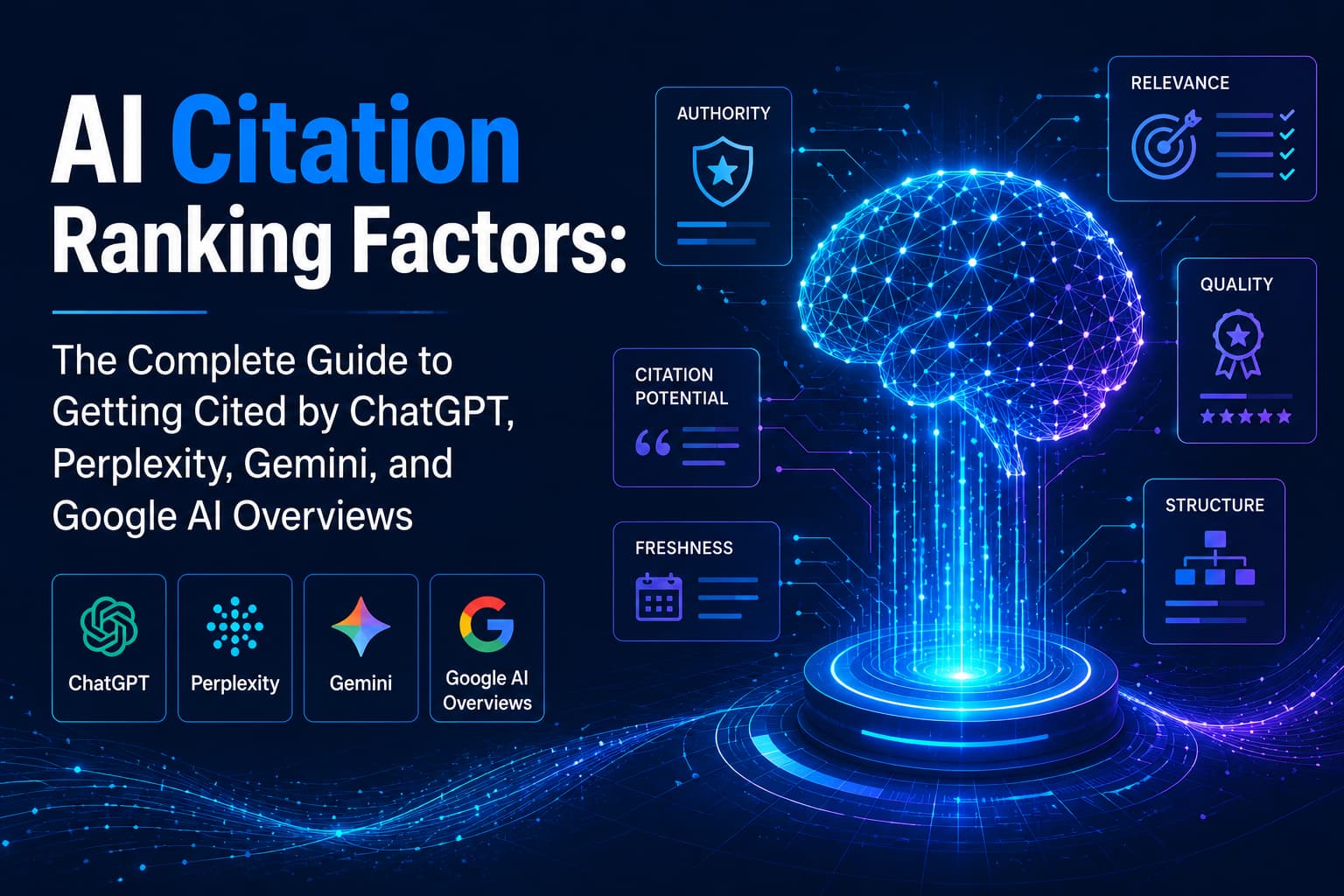
AI Search Optimization Services Explained: The Complete Guide to GEO, AEO, LLM SEO, AI Citations and Brand Visibility
The Complete Guide to AI Search Optimization Services: Established, Emerging and Specialized Solutions

Leave a Comment